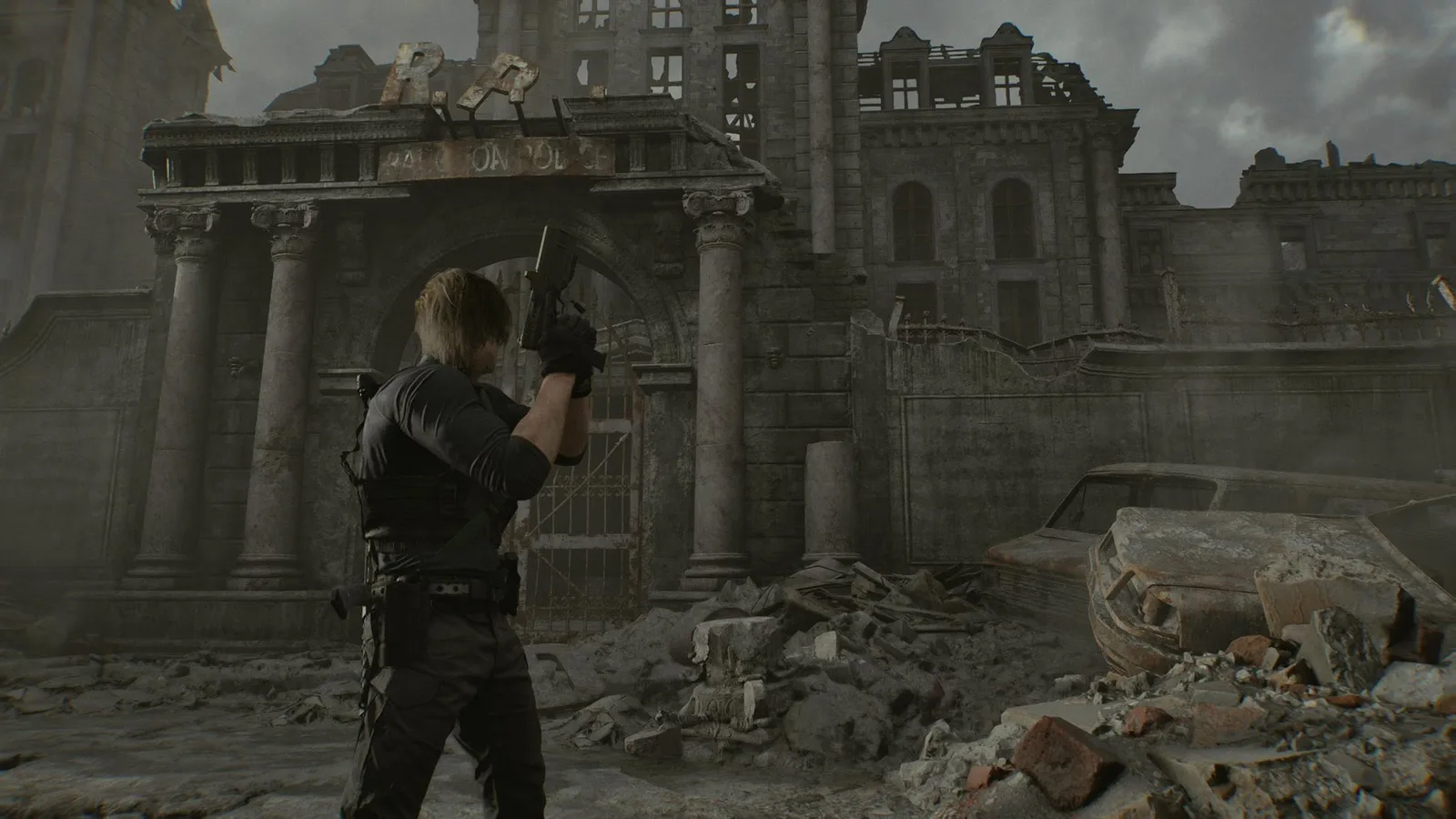
I’m not going to see your movie, Zach.
Not in theatres. Not on streaming. Not when it lands in a bargain bin somewhere in 2031 for four bucks.
And before you or anyone else says it—no, I don’t care if it’s a good horror movie.
Maybe it is. Maybe it’s scary and gory and beautifully shot, and maybe the snow looks cool as hell. Good for you.
But I don’t want a good horror movie. There are hundreds of good horror movies. I own a shelf full of them. I want a good Resident Evil movie—and the one thing you made crystal clear, interview after interview, is that you never had any interest in making one.
You said telling Leon’s story would be “redundant and… disappointing.” You said bringing the characters from the games into your movie would have felt like “a commercial imposition.” You said you were making it for you.
So I’m not paying to reward that. I’m not throwing fuel on a fire that’s been burning down the thing I love for the better part of a decade.
What I am going to do is write you a letter. Because you clearly understand horror, Zach. I just don’t think you have the faintest idea what makes Resident Evil special.
And somebody should tell you.
“Great. Another Movie Not Made for Resident Evil Fans.”
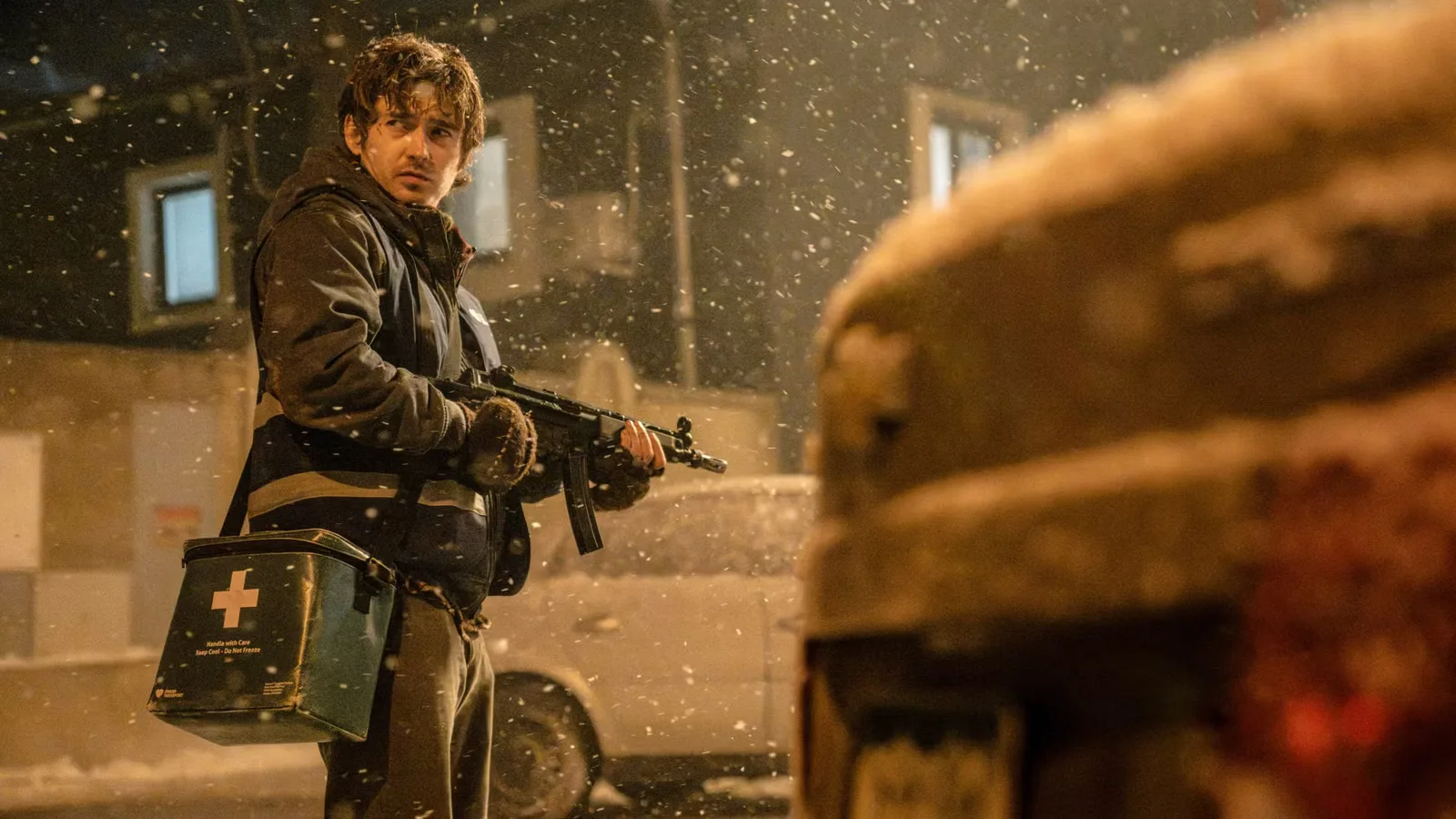
That was my reaction to the very first trailer...
Word for word, the second it ended.
When this movie was announced, we were told it takes place in Raccoon City. The Raccoon City. The one from the games, during the outbreak, somewhere in the neighborhood of Resident Evil 2. That was supposed to be the hook. That was supposed to be the thing that made the rest of us sit up and pay attention.
Then the trailer dropped.
Snow. Everywhere.
It doesn’t snow in Raccoon City. The outbreak happens in late September of 1998. Leon rolls into town on September 29th, hungover and late for his first day on the job. Jill is running from Nemesis in a tube top and a miniskirt, and she gets out just before the missiles hit on October 1st. That’s not parka weather.
And it isn’t 1998, either. It’s 2026. Your words, not mine: “This movie doesn’t take place in the ’90s when Resident Evil 2 came out. It takes place in the snow in 2026.” Which means your main character is walking around a city that, in the actual Resident Evil timeline, was wiped off the map by a missile strike thirty years ago. With a cell phone in his pocket.
The zombies run. Not shamble. Run.
And yeah, I already hear it coming: “Crimson Heads run!” They do. In the mansion. In the Resident Evil remake. A Crimson Head is a mutation—a specific thing that happens to some zombies, under specific circumstances, in a place that is not Raccoon City. Put a Crimson Head in the city and I’ll shrug, I’m not that picky. Turn every single zombie in Raccoon City into a sprinter and you haven’t found a loophole. You’ve made a different zombie movie.
Then there are the dogs. Not Cerberus. Not even Plaga-infested dogs from RE4, which would at least have been the wrong game instead of the wrong franchise. They’re mutant dogs splitting open into long, whipping tendrils like something that crawled out of the kennel in Carpenter’s The Thing.
No Leon. No Claire. No Jill. No Chris. No Ada. Not a cameo. Not one of the people who made this franchise what it is, anywhere in the story.
Well. Almost.
Because here’s the part that sounds made up. You were so adamant about avoiding literally any consistency with the games—but you still made sure to sneak in Easter eggs. Your movie supposedly takes place in Raccoon City, and Raccoon City has exactly one gun shop anybody cares about: Robert Kendo’s. Kendo Gun Shop. The easiest puzzle-piece Easter egg you could possibly ask for.
And the gun shop in your movie? The sign reads Leon S. Kennedy Guns and Ammo.
Leon. S. Kennedy’s. Gun shop.
Apparently, thirty years after Raccoon City got nuked off the map, the rookie cop is back in town selling shotgun shells.
And when Deadline asked you about it, you reportedly weren’t even sure how it ended up in there.
Jesus Christ. It sounds made up.
So what did the trailer give us to prove this was Resident Evil?
A typewriter. And a guy looking for ammo.
That’s it. That was the pitch.
And apparently, that’s enough.
“Redundant and Disappointing”
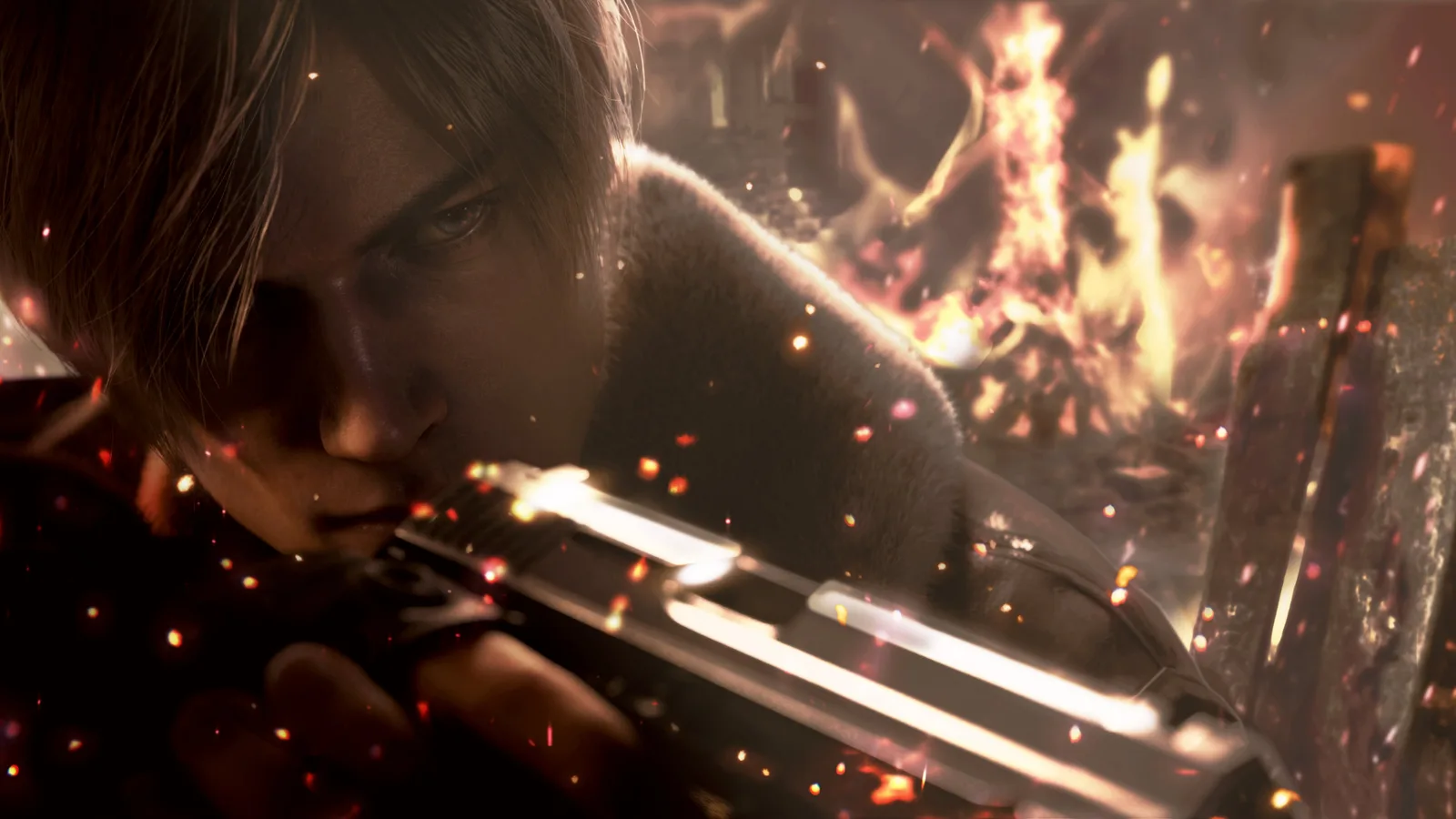
You told us exactly what you were doing...
I’ll give you this much, Zach: you never lied about it.
Before a single frame came out, you told us you had no interest in the stories the games tell:
“There’s kind of no winning there if I were to tell Leon’s story, because the games do such a great job. It would just be kind of redundant and… disappointing.”
You told MovieWeb that bringing the characters in would have been dishonest:
“It would have felt like a reach. It would have felt like it was a commercial imposition as opposed to, like, a natural creative, you know, thing.”
You told Comic-Con you weren’t doing a one-for-one adaptation, and that if that’s the bar, “then I guess in that regard, I have failed.” You said you “took liberties to tell a story I wanted to tell and make the movie look the way I wanted to make it look,” and that you think “it looks really f---ing cool to have a horror movie set in the snow.”
And then you told Deadline the quiet part out loud:
“I don’t want to write something where I have to make sure I’m tagging different data points to satisfy X. I just want to satisfy me.”
Read those back, one after another. The story you wanted to tell. The way you wanted it to look. Satisfying you.
Not one of those sentences has the fans in it.
But the one that tells me everything is what you said to IGN:
“I thought fans of these games, like me, would be thrilled that somebody was coming along and turning Resident Evil into a survival horror movie.”
There it is. The whole problem, in your own words.
You looked at a thirty-year franchise and decided the thing we were starving for was a survival horror movie. As if the missing ingredient, all this time, was the scary part.
It wasn’t, Zach. We’ve had the scary part since 1996. What we’ve never had—not once, in more than twenty years of live-action attempts—is a Resident Evil movie that actually respects who these people are.
Telling Leon’s story on film isn’t redundant. It’s the whole fucking point. We’ve played the games. We know the story. We want to see it—see him—forty feet tall on a movie screen. That isn’t redundancy.
That’s what an adaptation is.
What Makes Your Favorite Thing Special?
Let’s play a little game, Zach...
Think about your favorite thing. Your favorite movie. Your favorite band. Your favorite book. Got it?
Good. Let’s say it’s The Lord of the Rings.
Now let’s adapt it the way you adapted mine.
We take out every single character. All of them. No Frodo. No Sam. No Gandalf, no Aragorn, no Gollum. Not one survives the rewrite. We set it in “Middle-earth”—except Middle-earth is a tropical rainforest now. It’s modern day. Everybody carries an assault rifle. And our story is about a guy with a cell phone that won’t stop ringing, who has to throw it into the ocean.
We call it The Lord of the Rings.
Because it has elves in it. And the phone rings.
Sounds stupid, right? It sounds stupid just typing it out. But it has the name. It’s still fantasy. It borrows a couple of place names from the books. Would you call that The Lord of the Rings?
Of course not.
So let’s keep going. Would Misery still be Misery if you swapped Annie Wilkes for a completely different character? Would The Shining still be The Shining if the writer checking into the Overlook were perfectly mentally sound? Would Silent Hill still be Silent Hill without the fog—and without a main character carrying trauma for the town to drag out of him?
Every one of them would still be horror. The dread would still be there. The isolation. The creeping wrongness. Every box you checked to call your movie Resident Evil, they’d still check.
But none of them would be the thing anymore.
And here’s the kicker. If tone is all it takes—if that’s the only ingredient that makes these things what they are—then Silent Hill is Resident Evil. Misery is Resident Evil. The Shining is Resident Evil.
Resident Evil is one of my two favorite things in the world. Silent Hill? I only kinda like it. Why? If tone is all that matters, I should love them both the same. I don’t—because they are not the same thing.
So I have to ask you, Zach. How much can you remove from something before you take away everything that makes it unique? At what point does any horror with a little cheese on top become Resident Evil?
Apparently? This point.
Resident Evil Was Never “Just Horror”
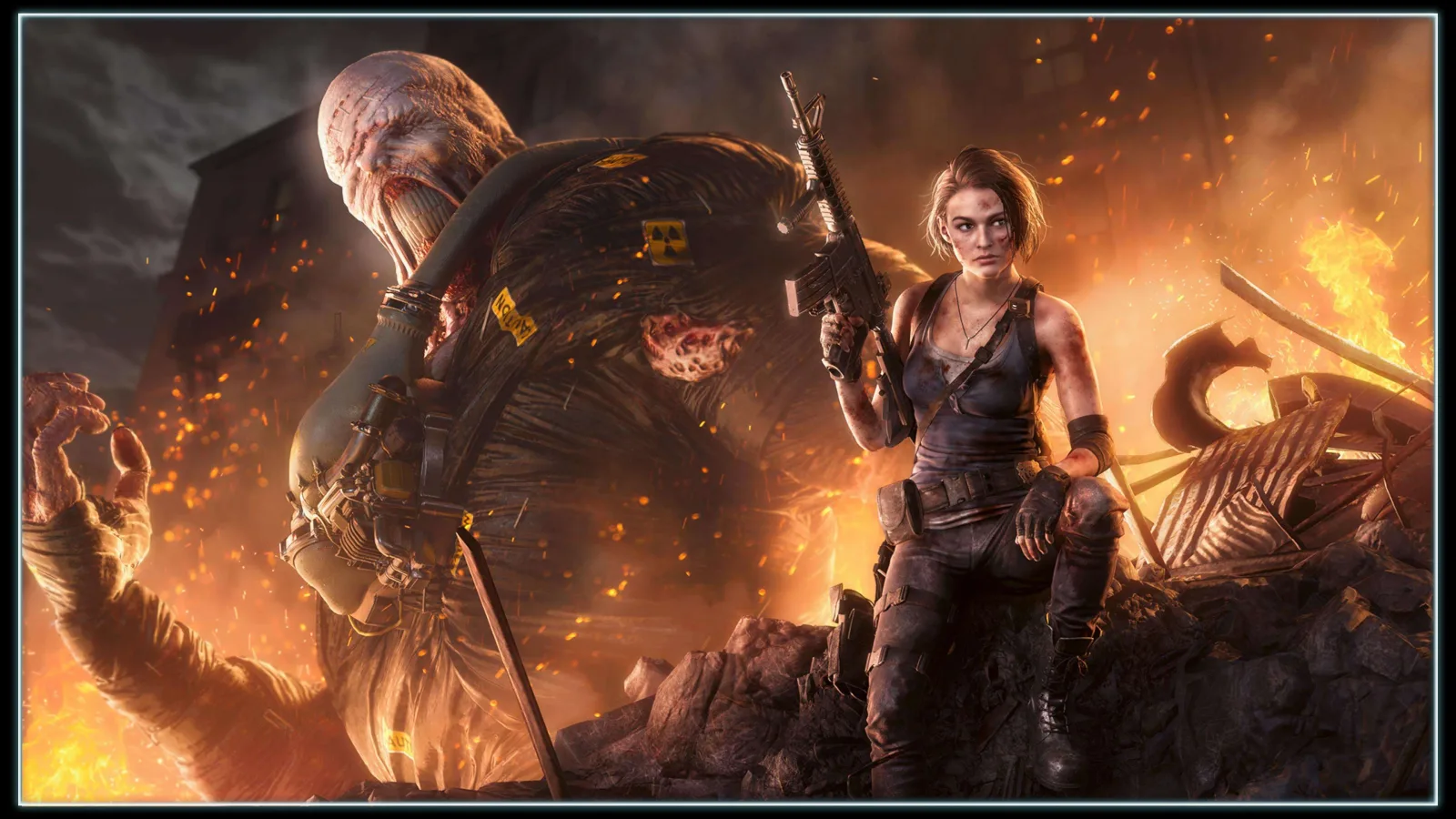
Everybody remembers the mansion. Nobody remembers the rocket launcher...
Here’s the lie that’s been eating this franchise alive, and you swallowed it whole: that Resident Evil is a horror series. Only a horror series. Nothing but a horror series.
It isn’t. It never was.
Resident Evil is three things at once, and it always has been. It’s horror. It’s action. And it is full-on, unapologetic cheese.
Everybody points back to the original game and says, “See? Pure horror. Just like it was meant to be.” And they conveniently forget that the entire game is about a team of specially trained operatives firing flamethrowers at man-eating plants, and it ends with you killing a ten-foot undead giant with a rocket launcher in the middle of a self-destruct countdown while a helicopter circles overhead.
That’s the roots. That’s the “survival horror” everyone keeps invoking.
And the heroes were never nobodies. Not once—well, once. Outbreak. The one time in thirty years this series put you in the shoes of regular civilians just trying to survive. Every other time? Highly trained soldiers. Police officers. Special forces. Spies. Federal agents. Or a literal mold monster masquerading as a cardboard man. (Looking at you, Ethan.)
S.T.A.R.S. were an elite unit. Leon was a cop. Claire spent years learning to shoot from her brother. Jill was former Delta Force and a “master of unlocking.” Ada is a spy. Wesker is a super-powered traitor in sunglasses. These people crack one-liners in the face of death. They suplex zombies. Chris Redfield punched a boulder.
That’s the tone, Zach. Not a helpless nobody in the snow. Action heroes against B-movie monsters, played with a straight face and a knowing wink.
This whole “Resident Evil is just horror” idea is exactly why I think Resident Evil 7 and 8 are the two worst games in the series. And it’s the exact rule I think you made this movie by:
As long as it’s horror, it’s Resident Evil.
It isn’t.
The Characters ARE Resident Evil
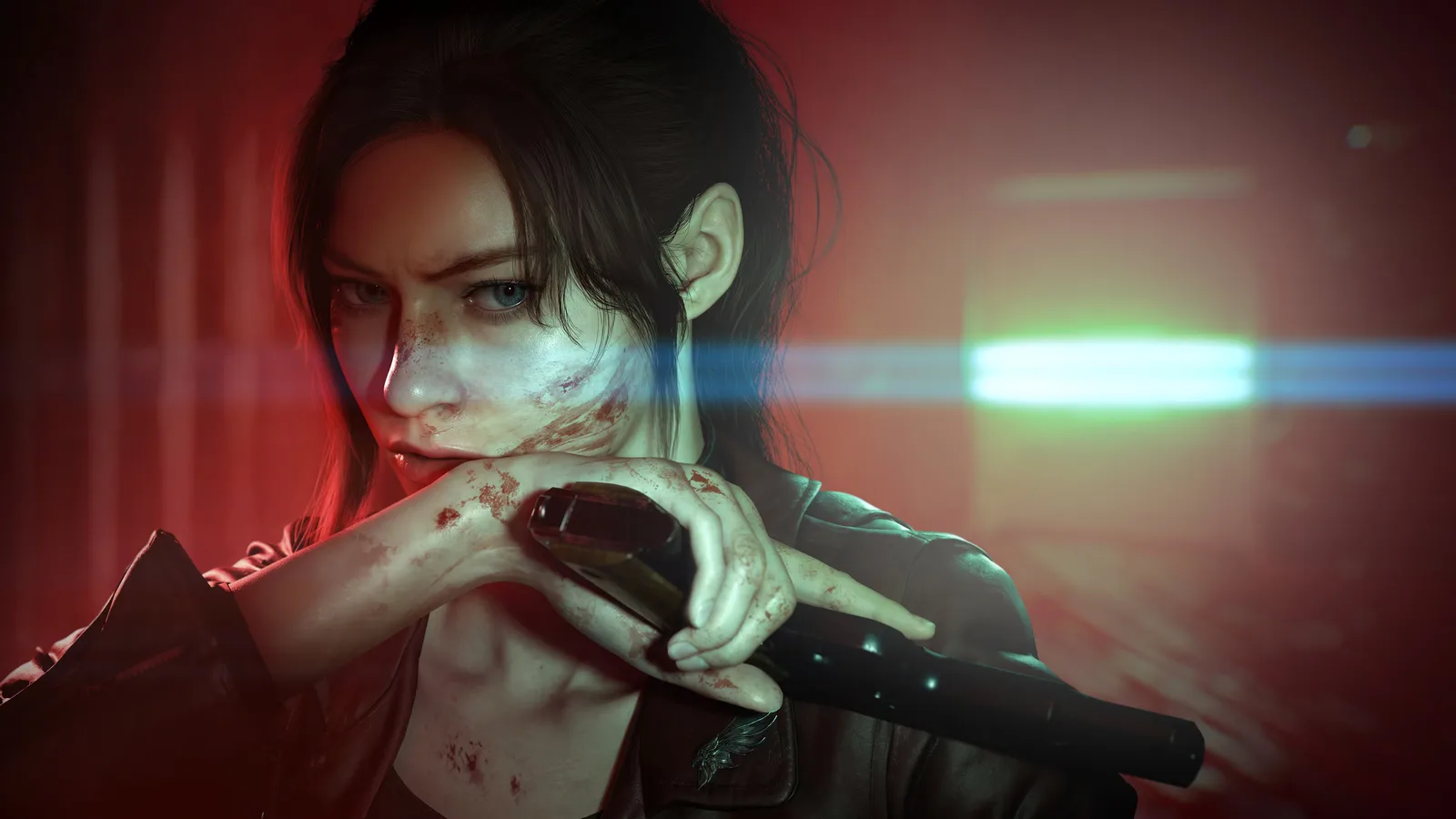
Go look at the merch...
Take the characters out of Resident Evil and tell me what makes it any different from Parasite Eve. From Killing Antidote, or any of the other Resident Evil clones on Steam. From literally anything with zombies and mutant monsters in it.
You can’t. There’s nothing left to tell apart.
The characters are Resident Evil. And if you think this series becomes one of the biggest franchises in gaming history without Leon, Jill, Chris, Ada, and Claire, you’re lying to yourself.
Don’t believe me? Go look at the collectibles. Every statue, every figure, every high-end sixth scale on every shelf in every collector’s room on the planet. Tell me who they’re modeled after.
It isn’t “the tone,” I can tell you that much. Nobody pays three hundred dollars for a statue of a vibe.
I would know. I own two three-hundred-dollar Jill Valentine figures—real skin, real leather, her entire RE3 kit, fully poseable, with eyes that move. A quarter-scale Grace Ashcroft. Sixth-scale Leon Kennedy, Jill Valentine, and Ada Wong. I stay away from Mega Plaza, our local nerd mall, because if I didn’t, I’d be broke.
I didn’t buy a single one of them because of the atmosphere.
And even if you set the characters aside for a second—you couldn’t even get the monsters right. Running zombies in Raccoon City. Dogs on loan from John Carpenter. Where are the Hunters? The Lickers? The Tyrants? The shambling, moaning dead that made eleven-year-old me want to throw the controller across the room?
No?
Oh. Okay.
Must be Resident Evil.
I think you believed so hard that Resident Evil is “just horror” that you tossed every horror thing you liked into a pot, stirred it into a jambalaya, and slapped the label on the lid.
Nobody Else Throws Away Their Heroes
“They’re too old to be the main characters anymore.”
I hear this constantly. In every Resident Evil Facebook group I’m in. From game journalists. From fans. It’s about fifty-fifty: half are perfectly fine tossing the originals out, and the other half are like me.
Where is this conversation for every other franchise on the planet? Where is it for Pokémon? Naruto? Street Fighter? Bleach? Conan the Barbarian? Dragon Ball?
Imagine getting rid of Goku, Gohan, and Master Roshi because they’ve “been around a while.” Insanity. Dragon Ball is my other favorite thing in the world, and it works because it loves its characters. It understands who they are and what they are, and it knows that Dragon Ball without them is just another shonen.
Even the adaptations I’ve torn apart on this blog didn’t go this far. Netflix changed the Witcher’s characters—it didn’t delete them. 2021’s Mortal Kombat shoved some new guy into the lead—but Scorpion, Sub-Zero, Sonya, and Kano were standing right there next to him.
Resident Evil is the only one where the answer is to erase them entirely.
So why are Resident Evil fans the only ones who look at a cast that’s been kicking ass and looking dope as hell for thirty years and say, “Oh yeah, cardboard Ethan and Bryan the delivery guy are the perfect replacements”?
Because that’s who you gave us, Zach. Bryan. A medical courier making a delivery in the middle of a Raccoon City outbreak, in a snowstorm, in 2026, thirty years after the city was blown off the map—with no connection to anyone or anything in the history of this franchise.
Makes a lot of sense.
How You Do It Right
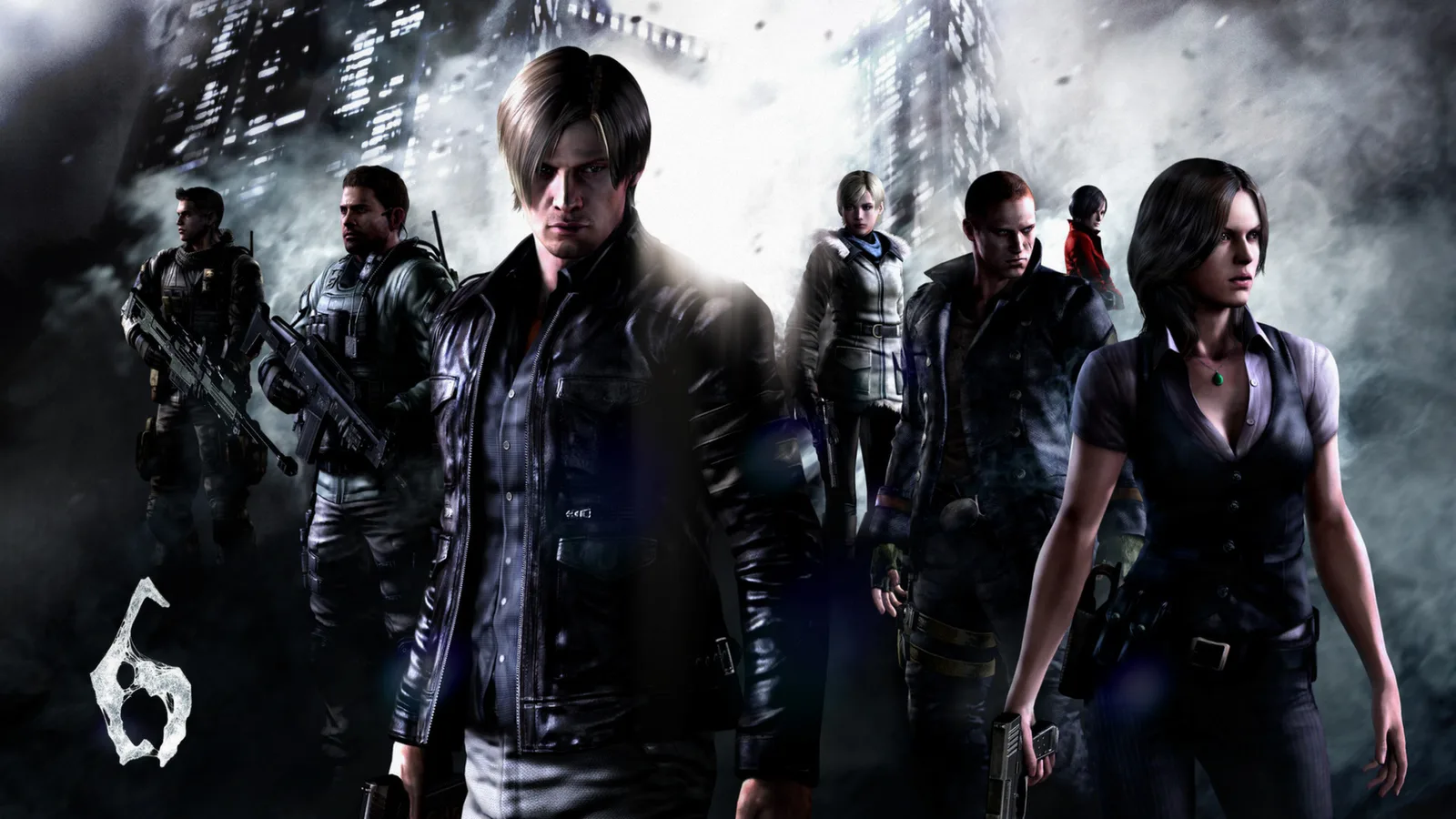
Resident Evil 6 figured this out back in 2012...
New characters are fine. They’re expected. Every long-running franchise needs new blood, and nobody is asking for Leon Kennedy to be the last man standing in every story forever.
What I’m asking is simple: don’t throw away the characters that got us here just to make room for the new ones.
Resident Evil 6—the game most people love to hate—did one thing brilliantly, the exact thing RE7, RE8, and your movie all get wrong. Every campaign that introduced someone new paired them with someone we already loved. Leon with Helena. Chris with Piers. Sherry with Jake. We got to meet the new character and start their story, while still having someone to hold onto that we’d followed for years.
Resident Evil 9 did it even better. It introduced Grace Ashcroft and made her a fully fleshed-out character without ignoring everyone else. Leon got to be exactly who Leon is. We got to see Sherry. And Grace became my second favorite Resident Evil character of all time.
(Jill is number one. That’s never changing. We’ll get there.)
Even the Milla Jovovich movies get more credit from me than yours does. Resident Evil: Apocalypse is probably the closest we’ve ever gotten to a lore-accurate Resident Evil movie—and probably the best we’ll ever get. It understood Raccoon City. It understood the tone, and it hit the horror, the action, and the cheese on all the right notes. It let its original-character fan-fiction run around right alongside Jill Valentine in her RE3 kit, Nemesis stomping through the streets, Lickers crawling the church walls, and the whole city getting nuked at the end.
It wasn’t perfect. It was still mostly wrong. But it was a hell of a lot closer than this.
Welcome to Raccoon City actually used the characters and understood absolutely nothing about any of them—every single one written or cast wrong. It doesn’t deserve more of a mention than that. And dear God, don’t even get me started on the Netflix series.
Dear lord.
Capcom, You’re Not Off the Hook Either
This didn’t happen in a vacuum...
Capcom has made it clear over and over and over again that when it comes to Resident Evil on screen, they couldn’t care less what the people handed the reins do with it. In every movie and every show, the characters who built this franchise get reduced to cameos in stories about their own world—or skipped entirely.
And they did it in the games first. RE7 and Village threw thirty years of characters in the dumpster and treated Chris Redfield like a completely different person. When the company that owns the franchise tells the world the characters are optional, why would a director believe anything else?
So no, Zach, I don’t lay all of this at your feet. You walked through a door Capcom left wide open.
But you walked through it proudly, and then told us we’d “feel seen.”
An Eleven-Year-Old and Jill Valentine
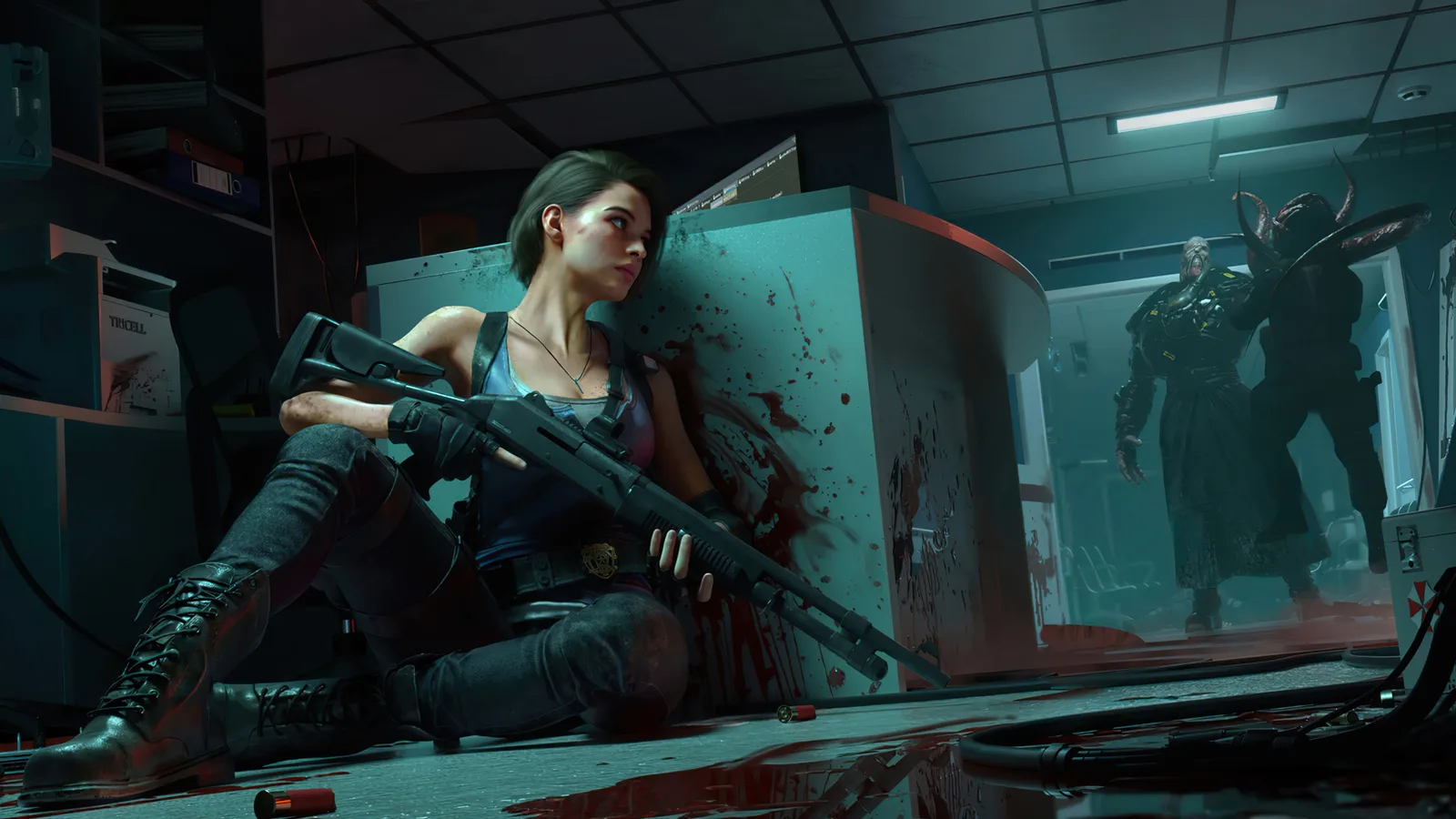
“Zombies, man. They creep me out.”
Dennis Hopper says that in Romero’s Land of the Dead—a Resident Evil movie, by today’s standards. That line has always been me. Always will be.
I was terrified of zombies as a kid. I still am. I played the first Resident Evil and noped out of it out of sheer fear. I couldn’t do it.
So naturally, like a fool, I bought Resident Evil 3 the second I saw it on sale at Babbage’s. (Yeah. It was that long ago.)
Why would a kid who couldn’t make it through the first game buy the third one?
Jill Valentine.
I had a crush on her. A real one. And loving her that much made me want to help her get out of that city—so I fucking did. I pushed through a game that scared the absolute hell out of me, because she needed me to.
Then I went back and beat the first two. Then every Resident Evil after that. Every mainline game, every spin-off, every side game the rest of the world forgot about. And I loved every single one of them with my whole heart—except two.
That pre-teen crush has lasted nearly thirty years. She’s on my shelf right now.
That’s what Resident Evil is to me, Zach. It’s not a typewriter. It’s not an ammo count. It’s the woman who got a terrified eleven-year-old through a city full of the dead. It’s Leon’s terrible one-liners and Chris’s boulder and Claire tearing the city apart looking for her brother. It’s thirty years of people I grew up with.
Why would I, a fan who has spent thirty years with these characters, pay to watch Bryan the delivery guy when I could be watching Leon German-suplex a zombie?
That’s what makes my favorite thing special.
And that’s exactly the part you decided to leave out.
In Closing
“That’s it for me.”
You told Deadline you’re done with franchises:
“I have never been approached by another franchise. Maybe I have, but it would never get to me because I have been very clear that I’m not doing that. I’m doing this, and that’s it for me.”
Go write your original stories, Zach. Write whatever you want to write. Satisfy you.
Just leave ours alone.
Good thing you’ve made that decision, because you’ve made it obvious you don’t care about the franchises you’re making films for, and as such your decision to step away from them is more than fitting.
A lot of people who don’t care what Resident Evil is—not enough to mind watching it get reduced to nothing more than genre—are paying good money to see your movie and rating it highly. I’m not grandstanding by saying I won’t be one of them.
I’m simply angry.
I’m angry to see movies like Mortal Kombat II prove that sticking to the source material isn’t disappointing and redundant. I’m angry to watch the actress playing Chun-Li go out of her way to add six and a half centimeters to her thighs, because she understands how important that is to the character she’s playing. I’m angry because these things prove you wrong—and you don’t care. You had a movie you wanted to make, and you didn’t care what movie people wanted.
I’ll go see Street Fighter. I was reluctant at first, but every single trailer gets me more and more excited. Hearing the actors talk about Street Fighter like it matters. Hearing them go to extreme lengths to be as true as they possibly can to the characters they’re playing.
I’ll go see it because they care.
Meanwhile? Yours?
Yours is just disappointing and redundant...