Full spoilers ahead. All of them. You can’t argue this movie honestly without them.
I saw Spider-Man: Brand New Day last night, and I’ve been chewing on it ever since, because I walked out of that theatre with a sentence stuck in my head that I genuinely never expected to write.
Ask a room full of people what the best Spider-Man movie is. Hell, widen it—ask them what the best comic book movie ever made is. You already know what comes back, because it’s been the same answer since 2004 and most of the people giving it have never had to think about it very hard.
Sam Raimi’s Spider-Man 2 isn’t that answer anymore.
And I need you to understand what it costs me to type that. That movie held the top spot for twenty-two years. It held it so long the question stopped being a question. It was the ceiling—the wall every other comic book movie got stood up against and measured—and most of them came up short. I’ve defended that movie in arguments, in bars, in comment sections I had absolutely no business being in.
And I think it just got beat.
By what? A fourth Tom Holland picture, in a franchise half the internet had already filed under content?
Yeah. That one.
Alright... let’s get the accusation out of the way first...
A lot of people have me filed under Critical Drinker, Nerdrotic, that whole shelf. I get it—I earned it. I wrote several thousand furious words back in January about what Marvel did to the Incredible Hulk and I meant every syllable. I’ve got opinions about The Witcher that I’ve already put in writing. I’ve got opinions about Luke Skywalker chucking his father’s lightsaber over his shoulder like an empty beer can.
So let me be absolutely clear, because this matters more than anything else I’m about to say:
I agree with those guys on principles. I don’t agree with them on opinions.
The principles are good ones—genuinely, unironically good. Respect the character. Earn the arc. Don’t sacrifice craft for messaging. Don’t talk down to the people watching. Make consequences cost something. Those are real standards and I hold every one of them.
But somewhere along the way, in that whole corner of the internet, the conclusions stopped being earned and started being assumed. You can predict the verdict from the man’s logo—before he’s watched a single frame, before the thing is even out. And the second that happens you’re not running a framework anymore.
You’re wearing a jersey.
Here’s the test. It’s a simple one and it costs nothing to apply.
Can your principles ever spit out a verdict your audience doesn’t want to hear?
If the answer is no—if the machine only ever produces applause—then they were never principles. They were branding.
So here’s mine, and I’ll take the hit for it. A Marvel movie in 2026—POST ENDGAME—just took the crown off Raimi. The Hulk sequence damn near put me on my feet. Zendaya is excellent and I’m tired of pretending otherwise for the comfort of people who’ve never once had to defend a position that wasn’t already applauded.
If that costs me a seat at a table I was only ever half sitting at, fine.
“It Tries to Do Too Much” Is the Laziest Read on the Internet
This is the complaint I keep tripping over—and it’s wrong, and it’s wrong in a way that tells me people watched the plot and not the movie.
“Too much” was never about how many things are in a film. It’s about whether those things are about the same thing.
And every single element in Brand New Day is one idea wearing different clothes.
What idea?
CONTROL. How much of it you’ve actually got over yourself. And how much of it you’re willing to hand over the day you finally admit that things change.
Peter’s losing control of everything—his powers are doing things he never asked them to do. His identity’s gone. His friendships are drifting past him while he watches from a rooftop like a man pressed against glass. He’s white-knuckling a life that’s being pried out of his fingers one at a time.
Jean Grey’s entire power is taking control of other people’s bodies—and she can’t control herself. She’s control incarnate and control’s victim—same power, same person, same skin.
The Hulk is the most famous loss-of-control character in fiction, and in this movie his control has been handed off to a gadget.
Frank Castle’s whole philosophy is control through finality. Remove the variable, own the outcome. That’s not what Frank does—that’s what Frank is.
And sitting at the middle of all of it is an organization holding the most powerful mutant on the planet in a box so it can get better at managing people exactly like Peter.
They’re called DAMAGE CONTROL.
The word is in the name. That’s not subtext. That’s a sign on the building.
So no, that’s not clutter. That’s a fugue—one theme played in six voices, and if you can’t hear it that’s not the movie’s fault.
Which is exactly why the comparison everyone keeps reaching for falls apart. Spider-Man 3—a movie I genuinely enjoy, for the record, so put the rock down—is overstuffed because Sandman, Venom, Harry and Gwen are all yanking toward different ideas. Same amount of stuff in the bag. No spine holding it upright.
Not once, not for a single second, did I feel Brand New Day come down with Spider-Man 3-itis.
And look at the damn title. The movie is called Brand New Day. The entire thesis—how much of yourself do you lose refusing to accept that things change—is printed on the poster.
The film named its own theme out loud and people called it messy.
This Is Not Jean Grey’s Movie.
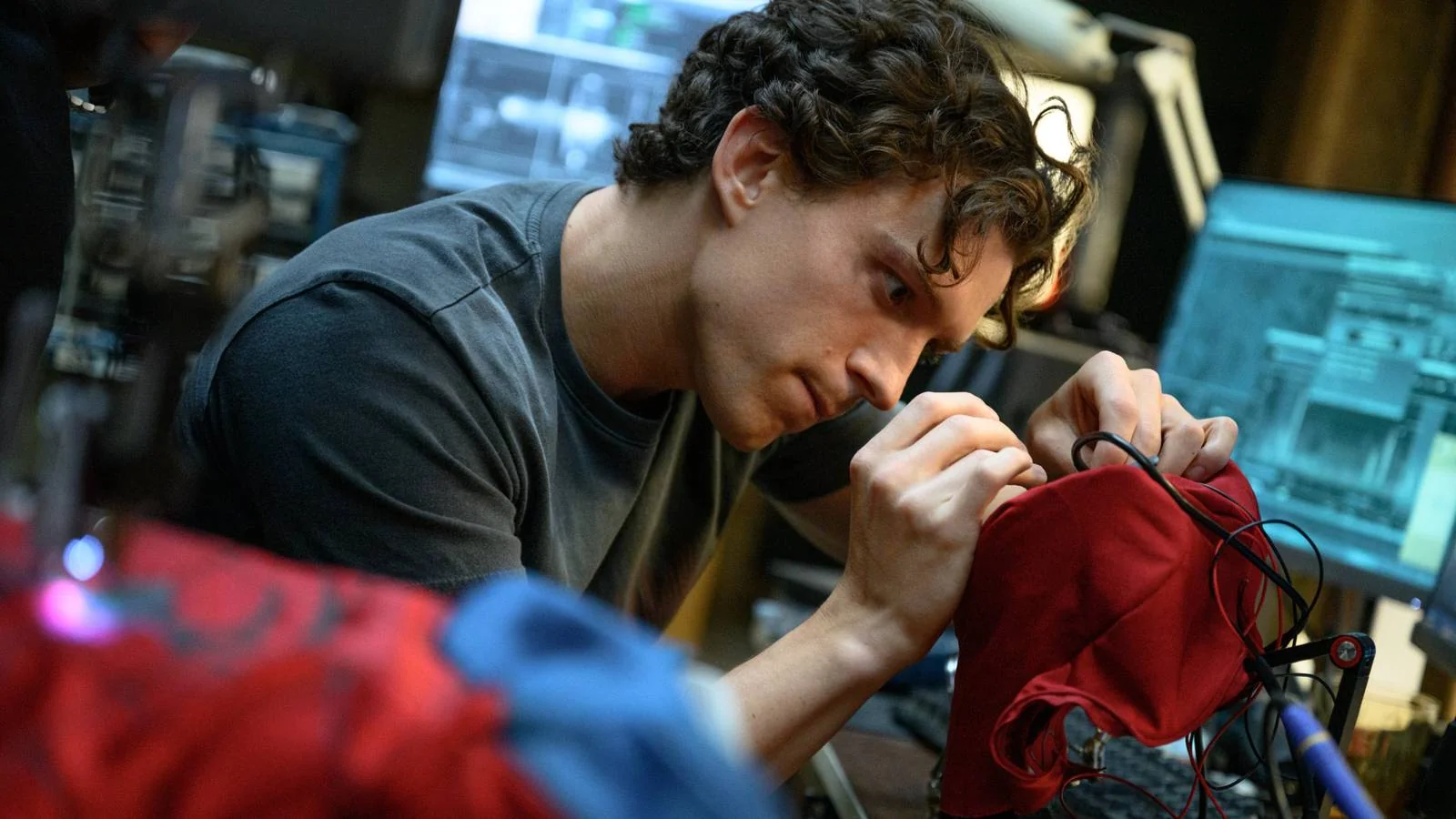
The “it serves Jean more than Peter” take is total, absolute, utter bollocks.
This one is a perfect little demonstration of how internet discourse has ruined entertainment. Somebody mints a take. It sounds clever, it’s short enough to fit in a post, and within about four days it has been repeated by several thousand people who are repeating the repetition. Nobody re-examines it. It just becomes a thing everyone knows about a movie most of them watched exactly once, if that.
(Says the guy discoursing on the internet about a movie he played no part in. I know. I am standing in the middle of the exact thing I am complaining about, typing.)
But it’s still bollocks, and here’s the cleanest way I know to prove it.
Doctor Octopus drives every single beat of Spider-Man 2. The plot is his. His experiment. His arms. His rampage. His redemption. His death. He gets the tragedy, he gets the invention, he gets the arc, and Alfred Molina walked off with half the reviews.
By the exact logic being aimed at Brand New Day right now, Spider-Man 2 is Otto Octavius’s movie.
Nobody has ever said that. Not once. Not in twenty-two years.
Because everybody instinctively understands that an antagonist driving the plot is just what antagonists are for. That film is about what Otto’s rampage costs Peter—the job, the girl, the grades, the rent, the powers, the suit in a garbage can in an alley.
Same exact architecture here—Jean supplies the engine. The movie is about what it costs Peter Parker to be standing in front of it.
The people making this complaint are measuring plot mechanics—whose choices cause things to happen. I’m measuring interiority—whose inner life the film is actually built around. Those aren’t the same axis, and the best movies this genre has ever produced hand the plot to the villain and hand every ounce of emotional real estate to the hero.
Because look at what actually happens to this kid.
He’s brave in a way I haven’t seen out of this character on a screen before. He’s hurt—visibly, genuinely hurt, and the movie doesn’t quip it away in the next scene the way these things always get quipped away. He’s tormented. He’s scared—out loud, more than once—and nobody frames it as a flaw. He loses himself completely.
He sacrifices his life.
He sacrifices his love.
And what does the movie hand him for it—a parade? A medal? A girl in the rain?
And then he walks away from a death bed to an entire city standing up on its feet for him.
In no Spider-Man movie ever made has Peter Parker been that brave, that wounded, that strong, that tormented, or that well acted. Not one.
So no. This isn’t Jean Grey’s movie. I’m not even certain it’s Spider-Man’s movie—and I’m saying that about a film that contains quite possibly the best Spider-Man action ever put on film.
It’s Peter Parker’s movie. One hundred percent. Start to finish.
And that distinction right there is the oldest and best idea this character has ever had.
Tom Holland absolutely murders the role. He’s been Peter Parker for ten years now—since Civil War back in 2016—and this is the performance that reaches backward and justifies the whole run. I walked out of that building wanting nothing on God’s green earth more than another Tom Holland Spider-Man movie.
We might genuinely be arriving at Hugh Jackman territory here. As in: who the hell else is ever going to do this this well?
And I’m done pretending Zendaya can’t act...
This is the one where my contemporaries laugh at me. I’ve made peace with it.
I never agreed with the internet on this one. Not once, not ever. And after this movie I can’t even pretend to entertain the argument in good faith anymore.
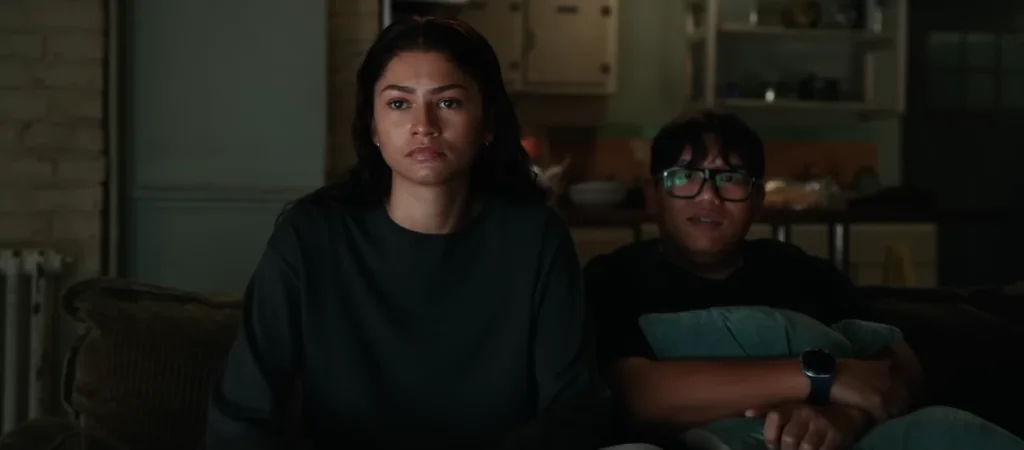
Zendaya carries an enormous amount of heavy emotional weight in this film, and she carries it in the quiet scenes, which are always harder than the loud ones. Anybody can scream. Sitting on a couch in a dim apartment—no score, no speech, no big swing—and communicating an entire relationship’s worth of grief with nothing but your face? That’s the actual job.
She, Holland, Sadie Sink and Bernthal all absolutely kill it. There is no weak link in this cast.
Now—is she in too much stuff? Yeah. Probably. So’s Tom Holland—who I also think is great. So’s Pedro Pascal. But whose decision is that? Hers?
Of course it isn’t. That’s a product of how Hollywood works now, and it’s the same disease modern WWE has: they strap the rockets to one or two people, fire them off, and never build another soul. Then the crowd turns around and blames the performer for being everywhere.
Overexposure is a booking decision. It isn’t a performance.
Nobody says a wrestler is bad in the ring because creative put him in every segment on the card. Zendaya doesn’t cast Zendaya.
And if you want the receipts, they exist. She won Outstanding Lead Actress in a Drama at twenty-four—the youngest winner in the history of the category. Won it again at twenty-six. Picked up a third nomination this month. Challengers sits at 96%.
Now let’s be honest with each other, because I’m not going to sit here and hold up a trophy like it settles anything. Those little statues don’t mean what they used to. Not with diversity requirements now baked into eligibility, and not after reports of a double-digit percentage of voters cheerfully admitting they hadn’t even watched the things they were voting on. The hardware means less every single year and everybody in the room knows it.
But let’s not swing so far the other direction that we pretend winning one at twenty-four means nothing at all either.
Especially since I’ve seen her act.
But here’s the part that actually matters to me, because I already made this exact argument this year about somebody else.
Back in January I wrote that Mark Ruffalo was never the problem with the MCU’s Hulk. That he’s a perfectly good Bruce Banner who was simply never allowed to play the tragedy.
Same principle. Different actor.
Zendaya spent three movies playing a deadpan quip dispenser with no interior life, the internet decided that meant she had no range, and the second somebody finally sat down and wrote MJ an inner life she became the emotional spine of the picture.
The performance didn’t change.
The material did.
Sadie Sink is JEAN FUCKING GREY...
I shouted. Out loud. In a room full of strangers who did not ask for that.
Months of speculation, an entire marketing campaign built on misdirection—and the smartest part of the whole trick is that they cast a redhead in a Spider-Man movie and then sat back and let a chunk of the audience spoil it for themselves incorrectly. Everybody was so busy arguing about whether she was Mary Jane Watson or Gwen Stacy—and I saw a lot of very confident Gwen predictions—that not one single person was looking at the X-Men.
And Sink is seismic in it.
She isn’t doing a comic book villain performance—not for a second. She’s doing a person who’s been contained, studied, catalogued and lied to—whose power is the ability to take other people’s bodies and who has never once in her life been allowed to own her own. When she finds out what really happened to Sara and the range on her just opens, that isn’t a power-up beat.
That’s a grief beat that happens to level a kilometre.
And then there’s Frank...
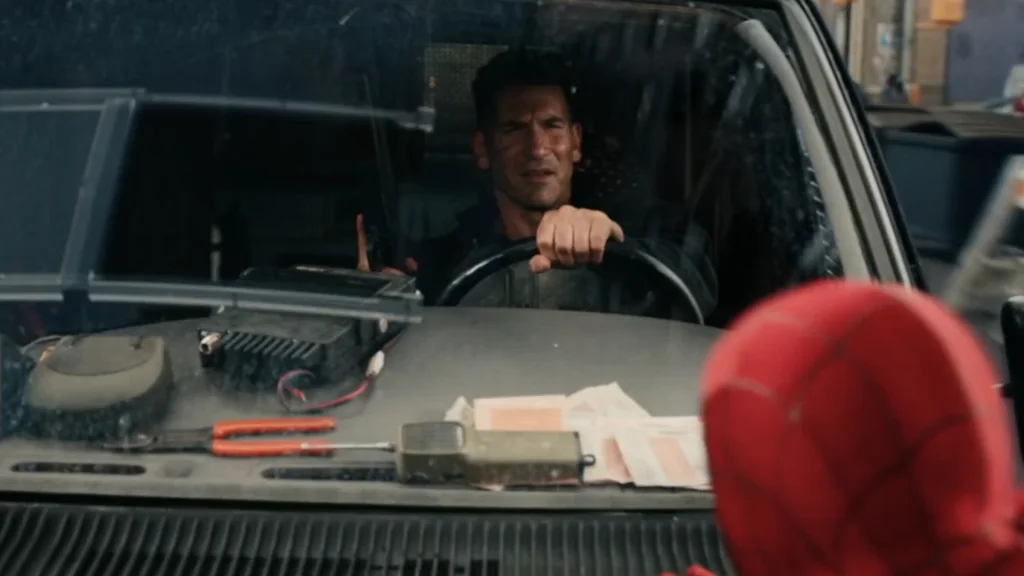
The charisma, the chemistry between Bernthal and Holland, is absolutely astounding.
Full disclosure before I say a single word about this man: I have never seen The Punisher. Not one episode. I’ve spent a decade hearing that Jon Bernthal is the definitive Frank Castle and I simply never got around to finding out.
I’m watching it this week.
That’s what this movie did to me in a handful of scenes.
Because sticking him in a truck with this Peter Parker shouldn’t work half as well as it does—and the reason it works is that these two aren’t a buddy pairing.
They’re a fifty-two-year-old argument.
The Punisher’s first appearance in comics, ever, was The Amazing Spider-Man #129 in 1974—where he was introduced as a man hired to kill Spider-Man. Every good version of this pairing since has run on that same engine: two men who genuinely like each other and hold completely incompatible positions on the single most important question there is.
That’s why the banter lands. It isn’t quips—it’s friction between two men who each believe the other one is fundamentally, dangerously wrong about the only question that matters.
And then the movie pays it off in a way that put me forward in my seat.
Frank takes the shot at Jean. Peter feels it coming through the spider-sense, and he puts himself in front of it anyway.
That’s the entire ideological dispute compressed into about two seconds of screen time. Frank’s absolutism—end the threat, accept the cost, somebody has to be willing to be the one who does it—runs headfirst into Peter’s flat refusal to let any human being get filed under acceptable losses.
And the movie doesn’t settle it with a speech. It settles it with Peter’s body between the bullet and the woman Frank had already decided was expendable.
Every funny scene those two share earlier in the film is load-bearing for that moment. The chemistry isn’t decoration.
It’s setup.
They finally let the Hulk be the Hulk...
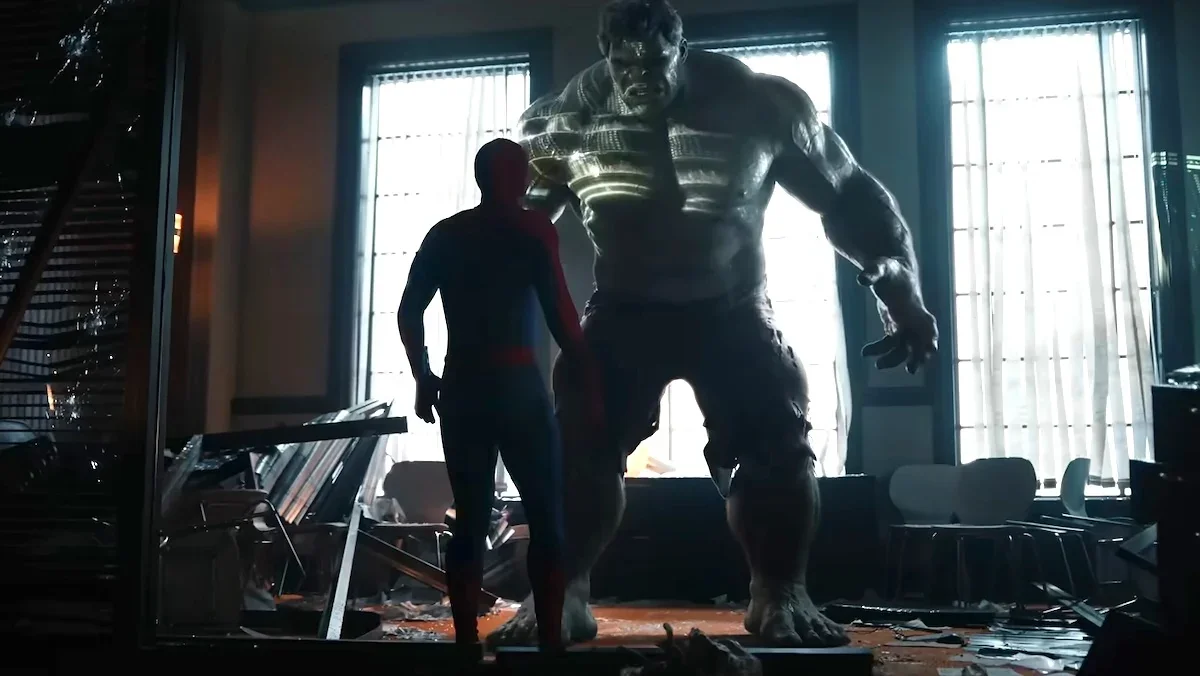
He was HUGE. He was destructive. He was terrifying. He actually felt like the Hulk.
Back in January I wrote a very long and very angry piece called The Public Humiliation of the Once Incredible Hulk, about how Marvel spent a decade sanding one of fiction’s great metaphors for trauma down into a smiling, harmless punchline. I stand by every word of it and I’m not walking back a single line.
So understand what it meant to sit in that theatre and finally watch him wreck shit.
Now, I’ve seen people arguing that Banner having no agency here—being possessed, being driven like a car—is just one more humiliation stacked on the pile.
I disagree. Twice.
First: the person driving him is Jean Grey. Barring Franklin Richards, and depending on which canon you’re working from the Scarlet Witch, she is the most powerful terrestrial character Marvel has. Getting steered by her isn’t an indignity—it’s a weight class. Getting pushed around by a government paperwork agency is an indignity. Getting overpowered by a top-three telepath is a statement about her.
Second, and this is the one that actually matters:
He kept going after she lost her grip on him.
If that rampage had stopped dead the instant her control broke, fine—he’s a puppet, the critics are right, I’ll eat it. It doesn’t stop. She opened the door. She did not manufacture what came through it.
And here’s the thing I haven’t been able to stop turning over since I left.
For ten years the story has been that Banner reconciled. Smart Hulk as growth. The war quietly resolved somewhere off screen, no cost, no reckoning, no scene where it hurt.
This movie establishes, in its own text, that the thing holding the Hulk back is a device.
Not peace. Not therapy. Not integration. Not a decade of hard-won emotional maturity.
Hardware.
Which means Marvel just conceded the exact argument I was making in January, in writing, on screen, in front of everybody. He was never fixed.
He was contained.
Ten years of “growth” was a leash, and Brand New Day is the movie that unclips it and shows you that everything underneath is exactly as enormous and as furious as it always was.
After all that? Watching him finally get to be what he actually is wasn’t fan service.
It was catharsis.
And then, about ninety seconds later, sitting there grinning like an idiot in the dark, the other thought showed up and sat down next to me. And it hasn’t left since.
THEY COULD HAVE DONE THIS THE WHOLE TIME.
That’s the part that infuriates me. Not that they finally got it right—that they were always able to get it right, and for ten years they chose not to.
There was never a technical barrier. There was never a budget problem. There was never some limitation in the effects work that had to be solved first. They proved that last night in about four minutes of screen time. The Hulk every single one of us has been asking for since 2012 was sitting right there on the shelf, fully available, the entire time.
And instead we got a decade of him as the punchline in the corner of somebody else’s movie. The gag. The comic relief. The mascot—the guy they wheel out when a scene needs a laugh. A character built out of abuse, grief and endurance handed a fleece and a selfie line and told to smile for the kids.
Ten years. And it turns out the version we wanted was never lost, never impossible, never too expensive—never any of the excuses.
So what was it?
Nobody could be bothered.
AND THEY FUCKING HAVEN’T. Not once, in ten years, until a Spider-Man movie happened to need a third-act problem big enough to matter.
So I’m grateful and I’m furious—and where this character is concerned, those two have shared a house for a very long time.
The Camera Actually Did Something Here.
And I say that with no hyperbole whatsoever.
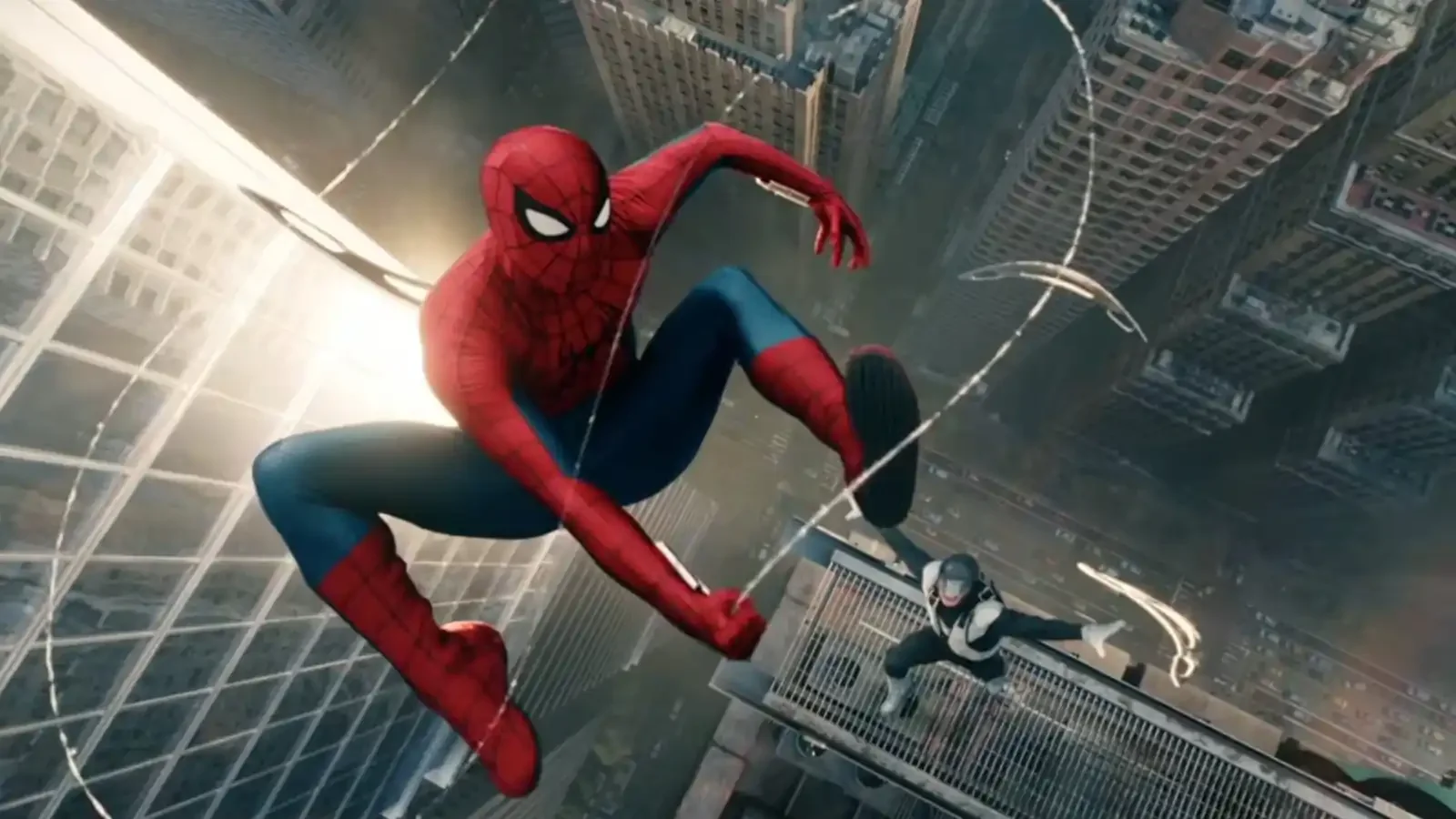
There are shots in this film—framings, compositions, whole sequences—that feel ripped straight off a comic page. And I don’t mean “comic book movie” in the marketing sense that studios use when they want credit for nothing. I mean actual, legitimate artistic merit lifted out of a panel and put up on a screen.
And there’s a concrete reason for it—this isn’t some happy accident where a committee stumbled into a good frame.
So what changed?
Destin Daniel Cretton didn’t hire a tentpole cinematographer. He brought Brett Pawlak—his longtime guy, the man who shot Short Term 12 back in 2013. Handheld. Available light. A tiny film about damaged kids in a group home. Then Just Mercy after it. That’s a character-drama DP, not a man who spends his life lighting green screens.
Marvel’s house style has spent ten years getting hammered for flat, weightless, interchangeable digital sludge—and Cretton’s answer was to hand a two-hundred-million-dollar Spider-Man movie to his indie guy and let him actually compose a frame.
Then pair that with the choreography. They shot as much of this in-camera as they could get away with—real stunt performers, practical swinging, effects layered on top of physical work instead of replacing it entirely.
And you feel it. Bodies have weight. Falls have consequences. It’s the same reason the train sequence in Spider-Man 2 still holds up twenty-two years later while a hundred weightless CG brawls have evaporated out of everyone’s memory.
At one point in the middle of a fight, Peter says “that is so cool.”
And I said “hell yeah it is” out loud, in a room full of people. (I’m not much fun in theatres.)
But there’s something worth noticing in that beat. Normally a character saying “that’s so cool” is a movie instructing you to be impressed, and it reads as insecure—it’s a film asking for a reaction it didn’t earn. It only works when the shot already did the job first, so the line arrives as confirmation instead of instruction.
The frame had already earned it. Peter was just agreeing with me.
And it’s characterization, not a quip. Peter Parker is the one hero in that entire universe who never stopped being a fan of this. Everybody else up there is a tired professional clocking in. Letting Peter be genuinely, stupidly delighted by his own life—in a movie built on isolation and grief—is the most in-character thing it could possibly have done.
So... is it better than Spider-Man 2?
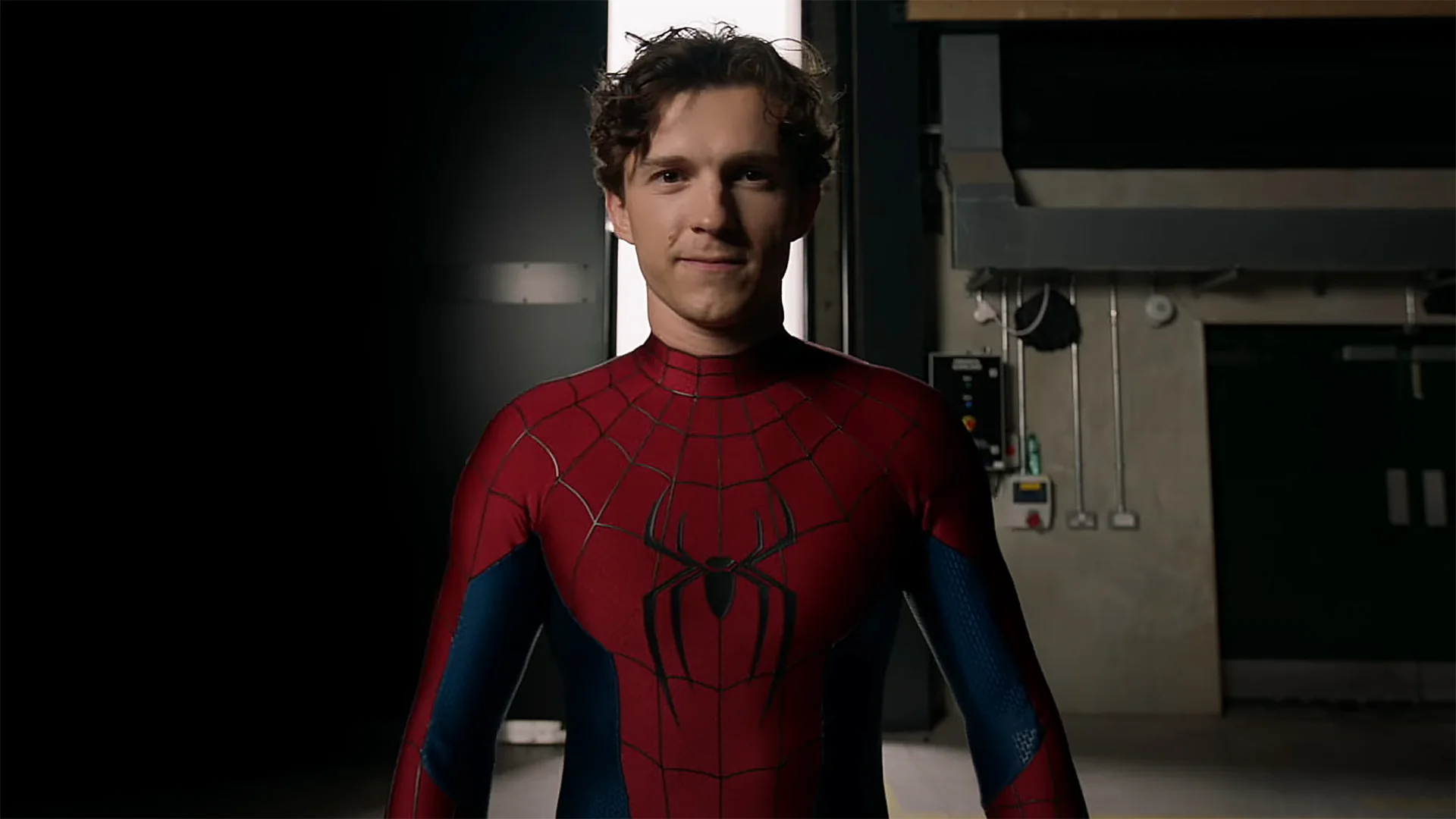
Yeah. I think it is.
And I want to be precise about why, because “it made me feel things” isn’t an argument, it’s a review score on a website nobody reads.
Most of the critics stopped about an inch short of where I’m standing. The Independent called it flat out the best Spider-Man film since Spider-Man 2. The Telegraph said the most purely enjoyable since then. The Daily Beast said the character’s best film to date, with the possible exception of Spider-Man 2. Only Polygon walked all the way to the edge and said it meets or maybe even surpasses the bar Raimi set.
I’m going all the way.
Because the ground I’m standing on isn’t vibes. Comic-panel composition is Raimi’s own signature—the Dutch angles, the snap zooms, the splash-page framing he dragged out of Evil Dead and shoved into superhero movies while everybody else was still pointing a camera at a man in a suit. That was the thing he did better than anybody alive.
And Brand New Day beat him at it.
Not on heart. Not on nostalgia. Not on Molina—God knows nobody is beating Molina. On frames.
And then there’s the ending. An entire city on its feet as Peter walks away from his own death bed—that’s the same emotional note as the train, where a car full of ordinary New Yorkers carry an unmasked kid’s body over their heads, put themselves between him and Doc Ock, and promise they won’t tell nobody.
That is the single most beloved two minutes in superhero cinema.
Brand New Day walked up to the champion’s best moment and matched it.
Twenty-two years is a hell of a reign. Spider-Man 2 is still a masterpiece, nothing about last night takes a single thing away from it, and if you want to keep it at number one I’m not going to think less of you for it. God knows I held that line long enough.
But I sat in that theatre and watched a movie be braver, sadder, better shot—and more about Peter Parker—than any of them have ever managed. I watched the Hulk get to be the Hulk again after ten years of being somebody’s punchline. I watched an actress I’ve defended for years finally get handed material worth her ability. I watched a fifty-two-year-old argument between two men get settled with a bullet and a body.
And I walked out already wanting the next one.
That’s a brand new day, I guess.
Things change. The only question the movie ever really asks is how much of yourself you’re going to lose refusing to admit it.