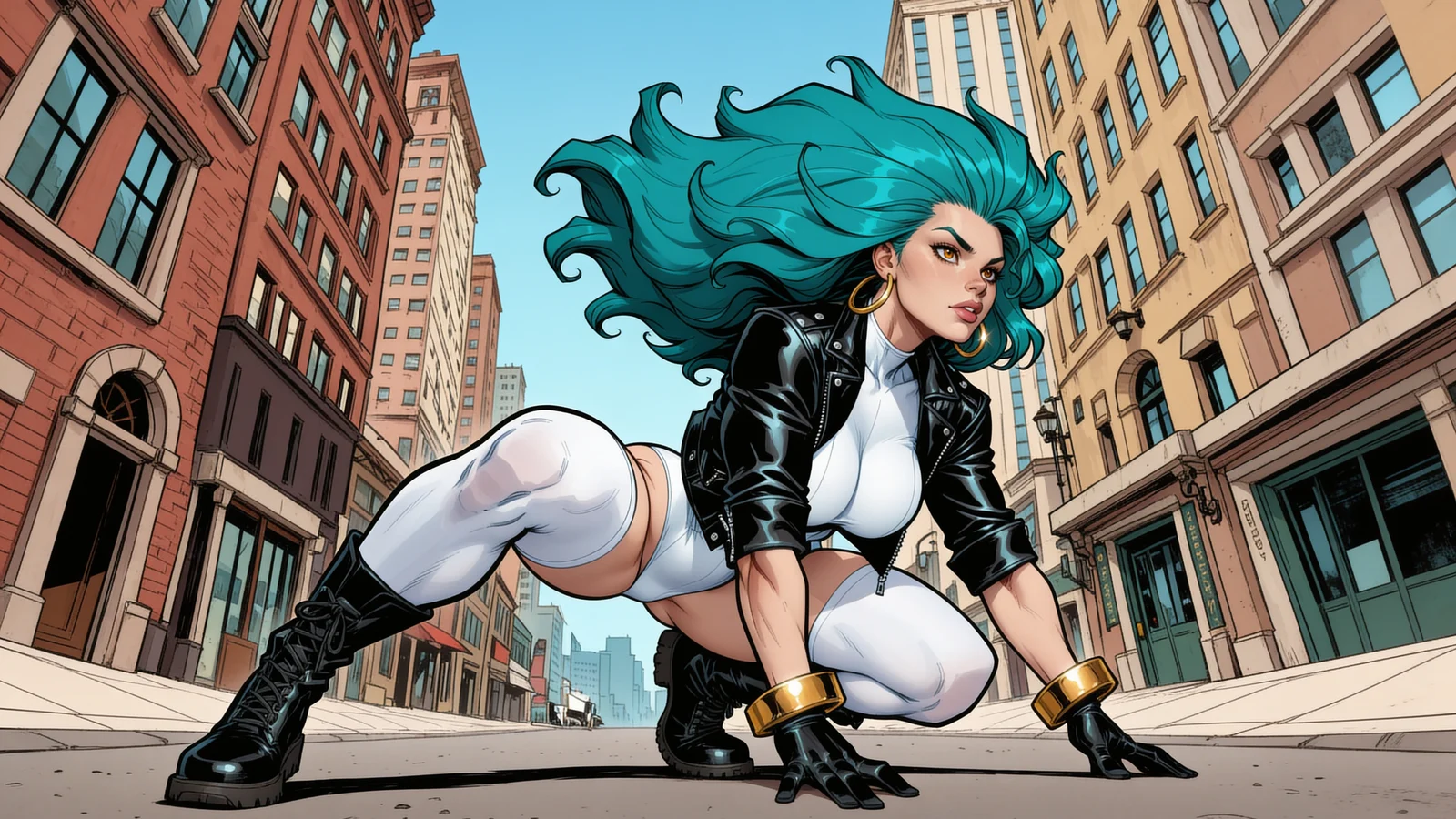
We Used to Know What a Hero Looked Like.
But somewhere along the way we forgot, and I’ve been holding this behind my teeth for years. Now I’m done being polite about it.
After years and years of being called a “gooner” for thinking art should be beautiful — and that beauty deserves representation, attention, and yes, even respect — I’m fully embracing the title that’s been bestowed on me, and rewriting the narrative that’s been written to define so many of us.
First, so you know where I’m standing: I was a President’s List student in art school. I’ve been a digital artist and graphic designer since I taught myself Photoshop at sixteen, and I’m working on my own comic book series right now. I’m not a guy who read a Wikipedia page about the Greeks last night. I’m a guy who got drilled in this — who sat in the rooms where they teach you why the figure works, and then spent twenty years using it.
So when I say that the entire media umbrella — art, movies, TV, comics, literature — has spent the last decade deciding that the most offensive thing a character can be is beautiful, I’m not saying it as a spectator. I’m saying it as somebody who was taught the craft they’re throwing away.
Somewhere along the line a jawline became a political statement. A waist became a provocation. Giving a warrior the shoulders of a man who could actually swing the sword he’s carrying became a moral failure — and the correct remedy became sanding every hero down until they look like the median attendee of a corporate onboarding seminar.
And the whole time, the people doing it have strutted around like they invented something. Like they’ve liberated us. Like for three thousand years every artist who ever picked up a chisel, a brush, or a camera was simply too stupid to realize the human body could be presented worse.
Nobody discovered anything. They just stopped studying.
The Greeks Did Not Do This By Accident
Twenty-five hundred years ago a sculptor named Polykleitos carved a man holding a spear, and then wrote a whole treatise about the math he used to do it. He was building a system — head as a fixed fraction of the height, exact ratios between limb and torso, the weight dropped onto one leg so the hips and shoulders counter-rotate and the figure reads as alive instead of stacked. That last trick is called contrapposto, and every figure artist since has stolen it. So has every cinematographer who ever told an actor to put their weight on the back foot.
Here’s what they never tell you in the version where the Greeks were just horny. He wasn’t sculpting a guy. He was sculpting excellence — the Greeks called it arete — and they had a single phrase for the entire package: kalos kagathos. The beautiful and the good. One idea, because they didn’t believe you could pull them apart.
The proportions weren’t decoration. They were the argument. Harmony in the form was a visible claim about harmony in the man. Broad shoulders and a braced stance said this one holds the line, and everybody in the street could read it without a caption.
The body was doing the talking. That’s not a hot take, that’s the foundation of the entire discipline.
She’s the One That Got Me.
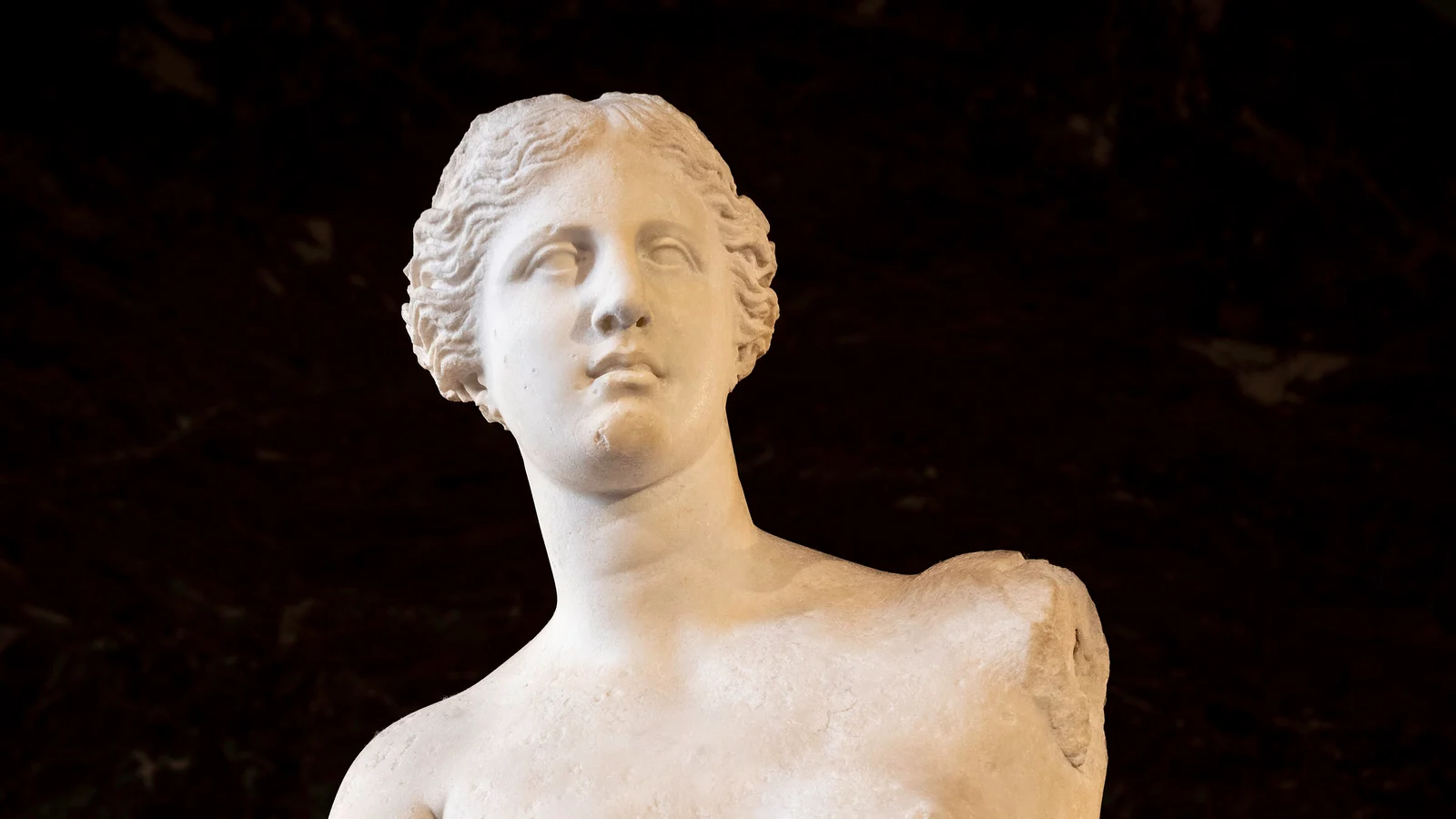
Anime got me first — I’ll own that. But when I actually got into art, the thing that reached out and took me by the throat was the Venus de Milo.
And people are so used to seeing her on a mousepad that they’ve forgotten what she is. Praxiteles broke a taboo a couple of centuries before her by carving Aphrodite nude — not degraded, not a joke, divine — and every Venus after that is arguing with him. The turn of the hip. The drapery caught at the exact second before it goes. She is unmistakably, deliberately erotic, and that was never some man being a pig with a chisel. Aphrodite was generative force. Desire. The engine the whole species runs on. You cannot sculpt the goddess of that and make her forgettable.
Sexiness wasn’t the vulgar part. Sexiness was the theology.
So when somebody informs me that drawing a beautiful woman is inherently a leer, I know I’m being lectured by a person who’d have told Praxiteles to cover it up.
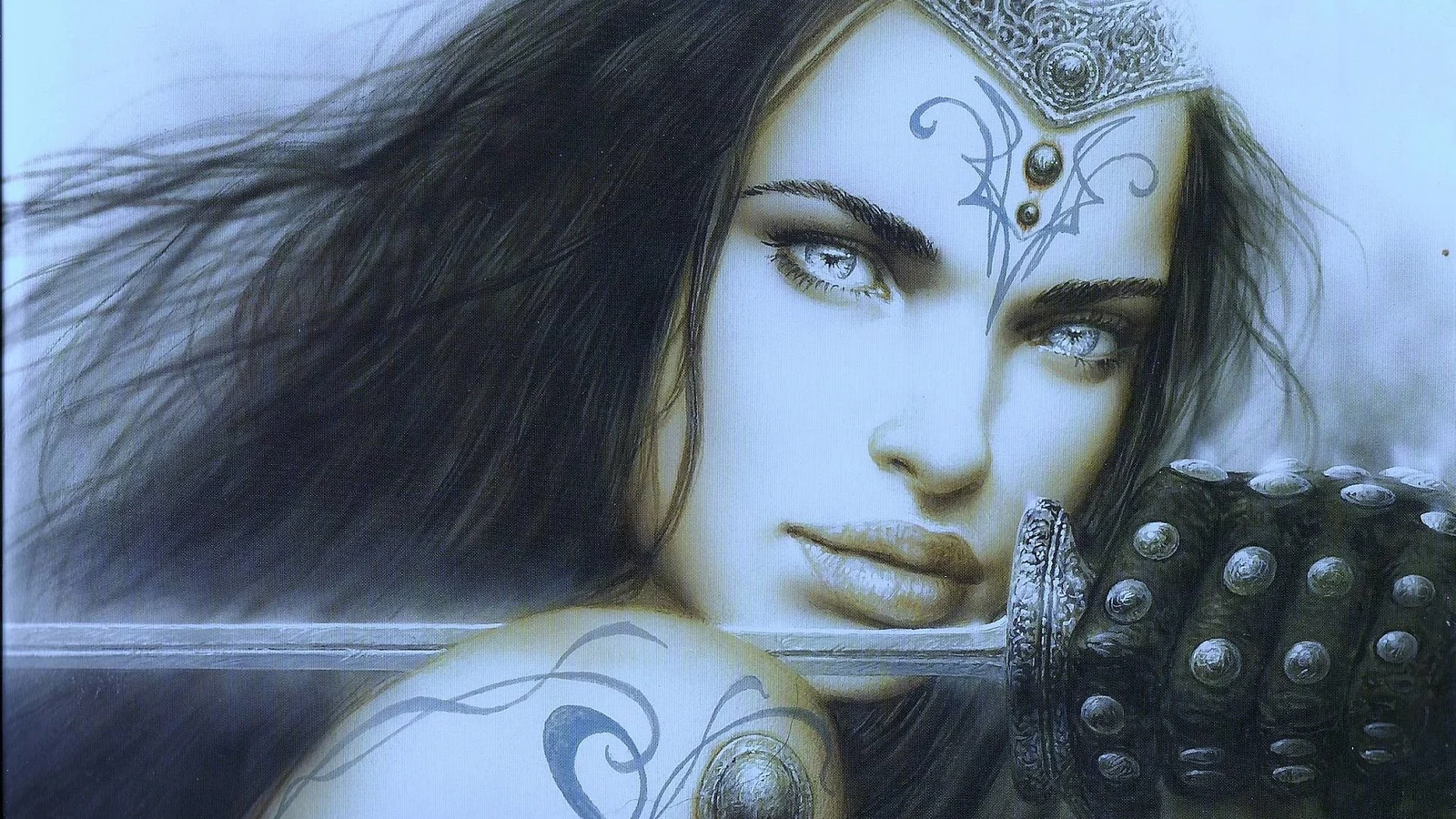
After her it was Luis Royo, and then every piece of fantasy art on every trading card I was playing with. That was the drug. This idealized version of a person that made every character feel bigger than life — and made the world they lived in feel bigger too.
And Ugliness Was a Word in the Same Language
Here’s the part people skip, and it’s the part that quietly convicts the whole modern approach.
The masters didn’t only render beauty. They rendered hideousness — constantly, on purpose, with tremendous skill — and it always meant something. Gargoyles snarling off cathedral gutters were sin you could read from the street. Leonardo filled sketchbooks with deliberately deranged grotesque heads specifically so he could define beauty against them. Bosch built entire hells out of it. Matsys painted The Ugly Duchess — sagging, coarse, absurdly overdressed — as a knife in the ribs of vanity. Hogarth and Daumier made careers out of hooked noses for greed and slack jaws for stupidity.
Film inherited every bit of that. It’s why a villain’s silhouette reads before he opens his mouth. It’s why the heavy is built like a heavy.
So let me plant a flag right here, because I’m coming back to stand on it later: I want ugliness in art. Draw it savagely. Shoot it in hard light. The grotesque is one of the most powerful words we have.
Which is exactly why I won’t hand over the beautiful. If everyone is ugly, ugliness stops meaning anything at all. You haven’t liberated a soul — you’ve deleted a vocabulary. You took a language that could say hero and monster and saint and rot with nothing but a silhouette, and mashed it down into one mumbled syllable.
The Three Who Rewired Me.
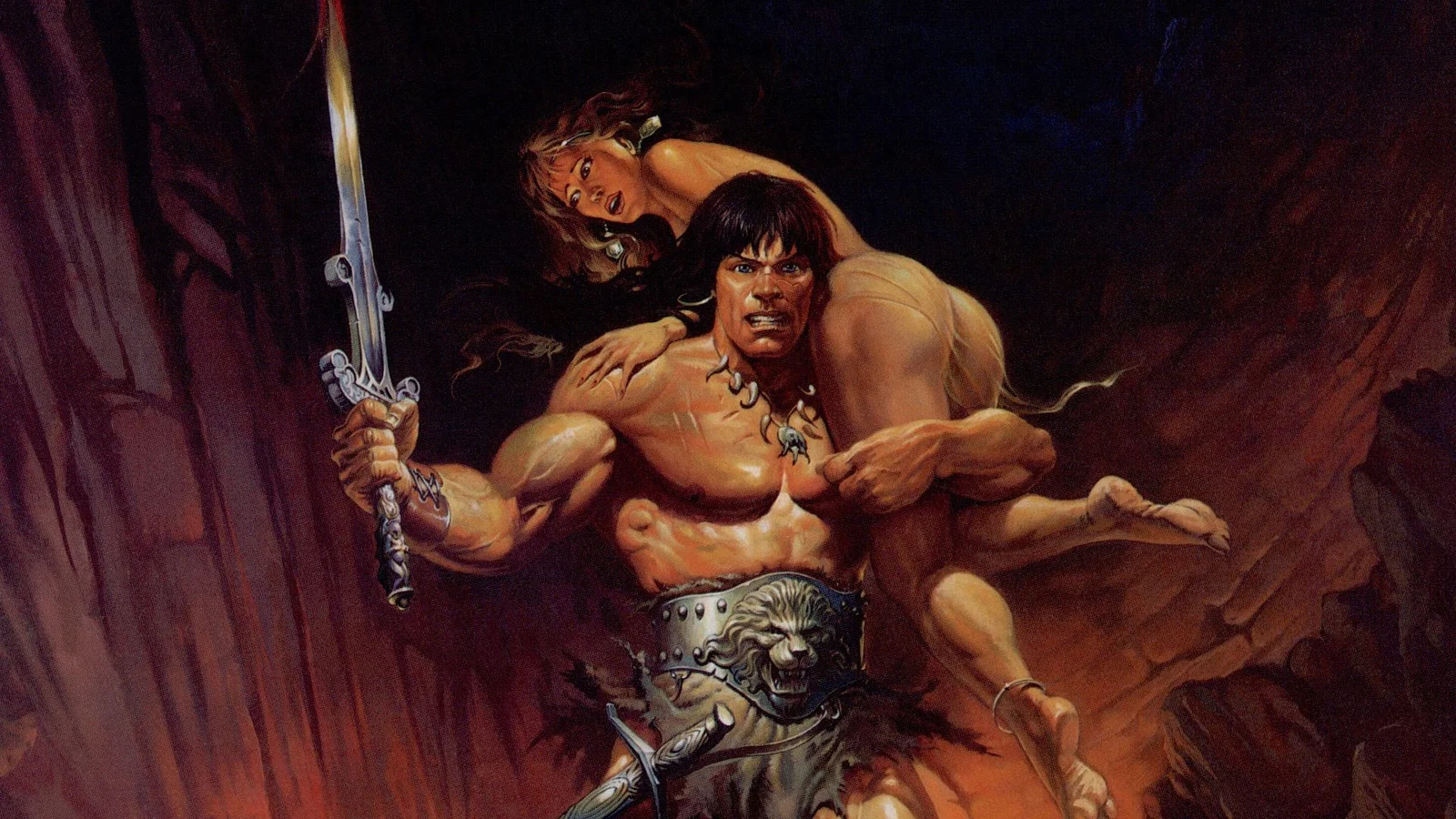
Frazetta first, obviously. Barbarians that read less like men and more like weather events with swords — everything torque and spine and murder-weight, bodies built entirely out of what they’re about to do to you.
Then Luis Royo. Royo does one thing better than every other artist in fantasy art: faces. That isn’t to say everyone else’s faces are bad — it’s that Royo’s are perfect. Everyone can paint a body. Royo paints a face — the shapes, the eye tones, the skin, the hair — and blows the rest of the field out of the water doing it. And he understood that a body modification isn’t clutter, it’s an accent. Something to catch the light and pull your eye along a curve you were already following.
And then Michael Turner, my favorite comic artist there’s ever been. Aspen Matthews out of Fathom genuinely reshaped how I see bodies on a page — that fluid, elongated, impossible line of his that somehow never stops reading as a real person moving through real water.
None of these men were confused. None of them were apologizing. They were doing exactly what the Greeks were doing, with better tools.
The Camera Was Always a Chisel.
And this is where people pretend the rules changed. They didn’t. Film is a visual medium. A casting call is a character design meeting that happens to use human beings instead of pencils.
The silent era proves it hardest — strip the dialogue and the body carries a hundred percent of the load, which is why Douglas Fairbanks vaulted through his own movies like a man auditioning for a frieze. Then the studios industrialized it. Golden Age Hollywood didn’t photograph faces, it sculpted them: guys like George Hurrell using a key light exactly the way Polykleitos used a chisel, carving cheekbones out of shadow, manufacturing gods on a soundstage. That’s not vanity. That’s the Canon with a light meter. When they needed Tarzan they hired an actual Olympic swimming champion, because you cannot fake the one thing the story is about.
And if you want the whole chain made literal — marble to paint to celluloid — it’s Conan the Barbarian, 1982. Milius didn’t really adapt a book. He adapted the paintings — Frazetta above all, with Boris Vallejo right beside him, the two of them having spent years deciding what that barbarian looked like in everybody’s head — and then cast a reigning Mr. Olympia to go stand inside them.
Christopher Reeve is the same proof from the other end. You will believe a man can fly only works because you believed the man first. The flying was the effect. The shoulders were the argument.
I Buy the Gooner Skins. All of Them.
And I’m not sheepish about a single one of them. This might be the most honest thing in this post.
I barely play video games anymore. I don’t have the hours or the patience. But I play Marvel Rivals, and I’ll tell you exactly why: it’s the only thing in years that hasn’t treated me like I’m stupid.
I main Black Widow — especially since her revamp, she’s my favorite thing in the game — and I own every skin she has except one I missed by not playing that season, which still bothers me. Luna Snow, Rogue, Emma Frost, Cloak and Dagger, Elsa Bloodstone, White Fox, Jean Grey, Invisible Woman, Scarlet Witch. I play Cyclops and Hulk and Moon Knight too, but yeah — look at that list. I play a lot of women.
And I bought the skins. All of them. The bikinis, the badass ones, the Black Widow cowgirl. The stuff the internet calls “gooner skins” while pretending to be above it.
Here’s why, and it isn’t complicated: we are naturally inclined to want to look at pretty things when we’re staring at them for hours on end.
You don’t go to a museum to find stuff you could have made at home. You don’t stand in front of a painting hoping it looks like a self-portrait. That isn’t art — that’s rendering. That’s a mirror with extra steps.
These same people would have called Michelangelo a misogynist gooner for putting naked women on a chapel ceiling and carving David to that kind of perfection.
It’s the same reason I love Highschool of the Dead. Yes, it’s shameless. It’s also good — committed animation, real action, actual craft holding the whole thing up. The fanservice isn’t covering for anything. It’s sitting on top of a well-made show that knows precisely what it is.
That’s the through line: none of it is ashamed. None of it apologizes between frames for the thing it’s doing.
And Yes — They Really Are Mad That Heroes Are Hot
I want to correct something, because I nearly wrote the polite version of this and the polite version is a lie.
I was going to tell you that nobody’s really angry about attractive characters, they’re just angry about being condescended to. That’s not true. Go look at what gets said about Marvel Rivals any given week — it’s a “gooner game,” it’s for creeps, the character designs are a moral problem. They aren’t being coy and they aren’t exaggerating for engagement.
They mean it. Hot is the offense. Full stop.
And once you understand why they mean it, this entire argument snaps into focus.
Art stopped being something you look up at. It’s supposed to be something you look into now. Every character has to be a self-insert or a representation — a seat at the table with your name printed on the card — and the instant that becomes the job description, beauty stops reading as an ideal and starts reading as an accusation. Because if she’s meant to be you, and she’s better looking than you, then somebody just called you ugly.
That’s the whole engine. That’s how “attractive” became a slur in a visual medium. And strip the vocabulary away and what’s underneath it isn’t art criticism at all — it’s just being mad you’ll never be the hero.
But that was never the job. Go back to what I said about the museum. Nobody ever walked out of the Louvre disappointed that the Venus de Milo didn’t look enough like them. She’s not supposed to. She’s a window, not a mirror — and the entire value of a window is that there’s something on the other side of it that isn’t already in the room.
Turn every window into a mirror and you haven’t included anybody. You’ve just built a very expensive hall of reflections and told everyone to be grateful.
And notice that the representation only ever runs one direction. Some traits get treated as things we need more of on the screen. Others get treated as things that need correcting off it — and white, straight, and sexy all reliably land in that second column. That’s not inclusion doing its job. That’s a swap with better branding.
Meanwhile Rivals takes my money every season, because it is one of the last things left that isn’t ashamed of itself. Nobody there is drafting a statement about why my enjoyment is problematic. They know exactly what people want, they make it beautifully, and they don’t insult you by pretending they did it for some other reason.
That’s the whole bar. Don’t lie to me to make me feel better about something I never asked to feel bad about.
So What Are We Actually Doing Now?
People keep asking me which specific one set me off, and the honest answer is all of them. It’s been happening so long I couldn’t tell you where it started anymore.
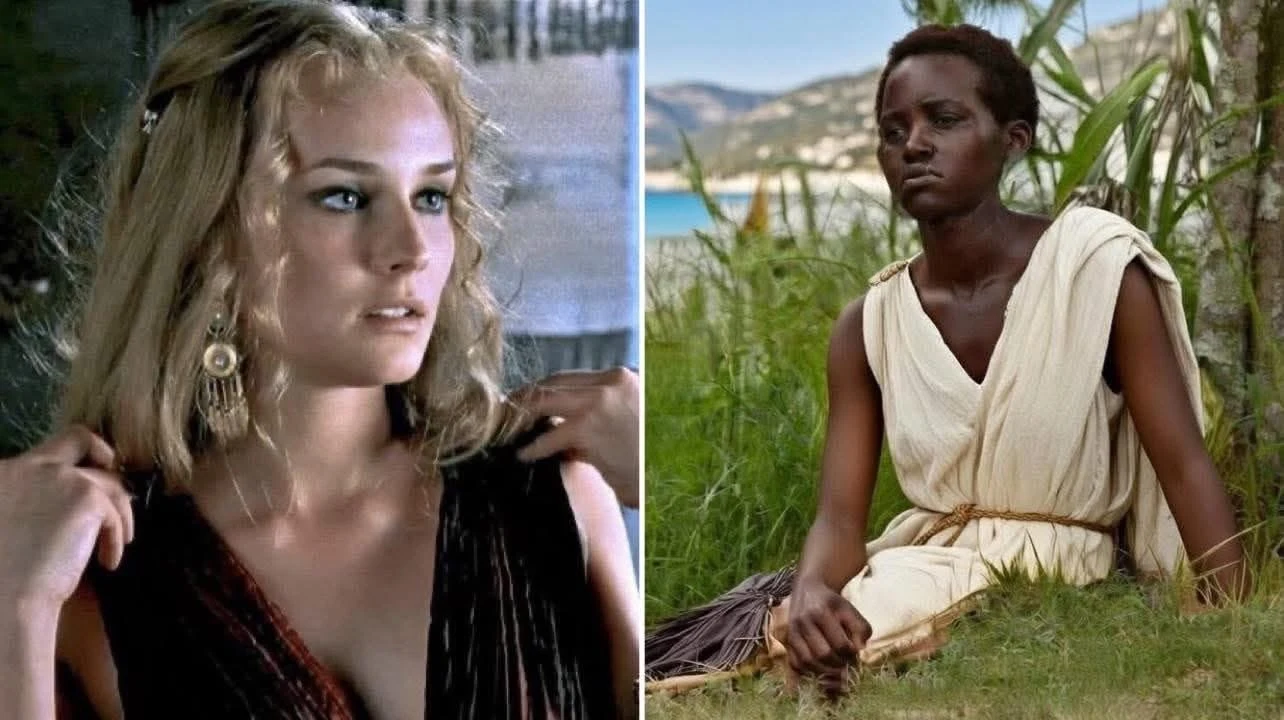
But you want examples, so: the Yennefer casting on The Witcher — and I’ve already gone into detail about that show at length, so I won’t relitigate the whole autopsy here. Making Triss black. Now Helen of Troy.
Erasure, Not Progression.
And Helen is the one that proves this was never really a casting argument at all.
Helen isn’t a character who happens to be beautiful. Beauty is her entire function. She is the one figure in Western literature whose looks are the plot — the war does not happen if she is merely lovely. “The face that launched a thousand ships” was never a compliment about a pretty girl. It meant a beauty so far outside the ordinary that grown nations set themselves on fire over it. That is the Greek ideal compressed into a single line. Same instinct as Polykleitos, same theology as Aphrodite — an impossible standard, written down on purpose.
So the failure isn’t who got cast. The failure is that nobody involved seems to understand what the role is. And I’ll prove I mean that: I didn’t think the actress in Troy was beautiful enough to play Helen either. So this isn’t about Lupita. This is about a complete misunderstanding of what that line actually meant when somebody wrote it down all those years ago.
Because you cannot cast Helen the way you fill a seat. Helen has to be impossible. And the second art becomes a mirror instead of a window, impossible stops being the target — “the most beautiful woman who ever lived” quietly gets downgraded to “a woman,” and then everyone stands around confused when the thousand ships don’t sail.
That’s the same disease as everything else in this post. It’s just wearing a toga.
And yes, I’ll say the quiet part too, because I’ve never been good at not saying it. Overwriting a character somebody else already built isn’t progression, it’s erasure. If you want more heroes who look different, make them. Build new ones, give them their own designs and their own myths, and let them earn a place beside the old ones on their own legs. That’s addition — that’s how the canon has always grown. The other way is just taking the nameplate off a statue and screwing a new one on.
And underneath all of it is the same disease: decisions made from outside the work, by people optimizing for a press release instead of for the frame, with the first thing thrown overboard always being the visual logic that made the character legible in the first place.
A design is an argument. A casting choice is an argument. Change them for reasons unrelated to that argument and you don’t get a bolder character — you get an incoherent one. And in a medium where physical prowess and beauty are the pedestal the whole thing stands on, kicking out the pedestal doesn’t make the statue humble.
It makes it rubble.
You cannot committee your way to an icon. Nobody ever carved a god out of a compromise.
Yes, I’ve Been Called a Fascist For This. Let’s Get It Over With.
I’ve been called a fascist for saying Conan should be built like Conan.
The word’s gone dull on me. It doesn’t land as an accusation anymore, it lands as the noise people make when they’ve run out of argument and still want the last word. So call me it. I’ve been called it for less, and usually by someone who’s read fewer books than the statue.
But there’s an actual historical claim buried under the name-calling, and unlike the people shouting it, I’ll treat it seriously — because I’d rather kill it properly than pretend it isn’t standing there.
The claim is that idealized classical bodies are fascist aesthetics, and whoever says it is usually pointing at something real. Mussolini ringed a stadium with sixty colossal Greek-style marble nudes. Hitler made Arno Breker his state sculptor and lined the Reich Chancellery with monumental idealized men. And in 1938 Leni Riefenstahl opened Olympia by drifting her camera through Greek ruins until the Discobolus dissolved into a living athlete who finished the throw — a gorgeous, ice-cold piece of filmmaking whose entire argument was the Greek ideal is reborn in the modern German body.
That happened. I’m not waving it off. But think about what’s actually being claimed here.
Polykleitos was working roughly twenty-four centuries before anyone goose-stepped anywhere. Praxiteles, Michelangelo, Botticelli, the whole academic tradition, Frazetta, Royo, Turner — none of them were waiting on a permission slip from the 1930s. Saying the tradition belongs to the regime that borrowed it last is like saying the most recent bank robber now owns the vault.
Because tyrants steal prestigious things. That’s the entire mechanism. The fasces was a Roman magistrate’s bundle before it was a party’s name. The eagle belonged to Rome, and Napoleon, and America. The swastika was an auspicious symbol across Hindu, Buddhist, and Greek design for thousands of years before it got stolen and ruined so completely that the West still can’t touch it. That one’s the real lesson — theft genuinely can poison a symbol. So the honest question was never was it used. It’s whether the theft swallowed the whole tradition or just a corner of it. And that answer gets obvious the second you notice who else was speaking the language.
Soviet Socialist Realism — the literal other side of that war — drew the exact same idealized musculature with a hammer in the fist instead of a spear. Jacques-Louis David painted heroic neoclassical bodies for a revolution against a king. The Catholic Church paid for the Sistine ceiling. American civic architecture is Greek temples with air conditioning. When monarchists and republicans and communists and fascists and the Vatican all reach for the same visual language, that language isn’t an ideology. It’s a vocabulary — and vocabularies don’t have politics. Only sentences do.
Push the accusation all the way and it eats everything: Michelangelo’s David is fascist, the Sistine Chapel is fascist, the Venus de Milo is fascist, every Olympic medal ever struck is fascist. Any argument that convicts the entire history of Western art of a crime invented in 1922 isn’t an argument. It’s a tantrum with a bibliography.
And here’s the part I actually want you to sit with.
What made the Nazi art program monstrous was never the muscles. In 1937 they staged Entartete Kunst — “Degenerate Art” — hauling modernist work out to be jeered at while telling artists which depictions of the human body were healthy and which were degenerate. The evil was a committee deciding which forms were permitted. That’s procedural. It would have been exactly as monstrous with the aesthetics flipped. A regime banning beauty is doing the identical thing as a regime banning distortion.
So when I get handed a list of bodies I’m not allowed to draw, and told which silhouettes are acceptable this year, and informed that the ones I love are degenerate — I’m not calling anybody a Nazi. I’m saying the structure of that demand is the part worth being afraid of, and that structure doesn’t care which way it’s pointed.
And notice which one of us is actually banning something here.
I spent a whole section of this post arguing that ugliness is essential. That the grotesque is load-bearing. That Bosch and Matsys and Hogarth were doing sacred work and you should draw hideousness savagely whenever you mean it. My position has room for every body there is, because every one of them says something different and I want all of it on the table.
Theirs has no room at all for the beautiful.
That’s not me being the authoritarian in this conversation. That’s me refusing to hand over the chisel.
Give Them Something to Reach For
Here’s what’s underneath all the ranting, and it’s the only part I really care about.
Idealized art was never supposed to be a mirror. It’s a window — and on the other side is a version of a person braver and stronger and more beautiful than any of us manage on a given Tuesday. That’s not an insult to the audience. That’s a gift to them.
I know it is, because it was given to me. Anime first. Then a broken-armed statue that stopped me dead. Then Royo, then a stack of trading cards with fantasy art on them that made the whole world feel bigger than the room I was sitting in. Nobody had to explain the transaction to me. I understood it instantly, the way every kid does: this is not you, and it is something to move toward.
That’s what I’m building my own book toward right now. Not a census. Not a composite. The best version of every person in it.
When you strip that out — when you insist art has to flatter us exactly as we already are — you’re not being kind. You’re telling an entire audience there’s nothing left worth reaching for. You take the window, hang a mirror in it, and then act confused that nobody wants to look.
So draw them beautiful. Cast them beautiful. Build the men like Frazetta built them, like they could take the door frame with them on the way out. Render the women like the ideal you carry around in your head when you hear the word. And draw ugliness too — savagely, when you mean it, when it’s saying something true.
Just stop apologizing for the human form. Three thousand years of artists weren’t confused.
They were doing it on purpose.