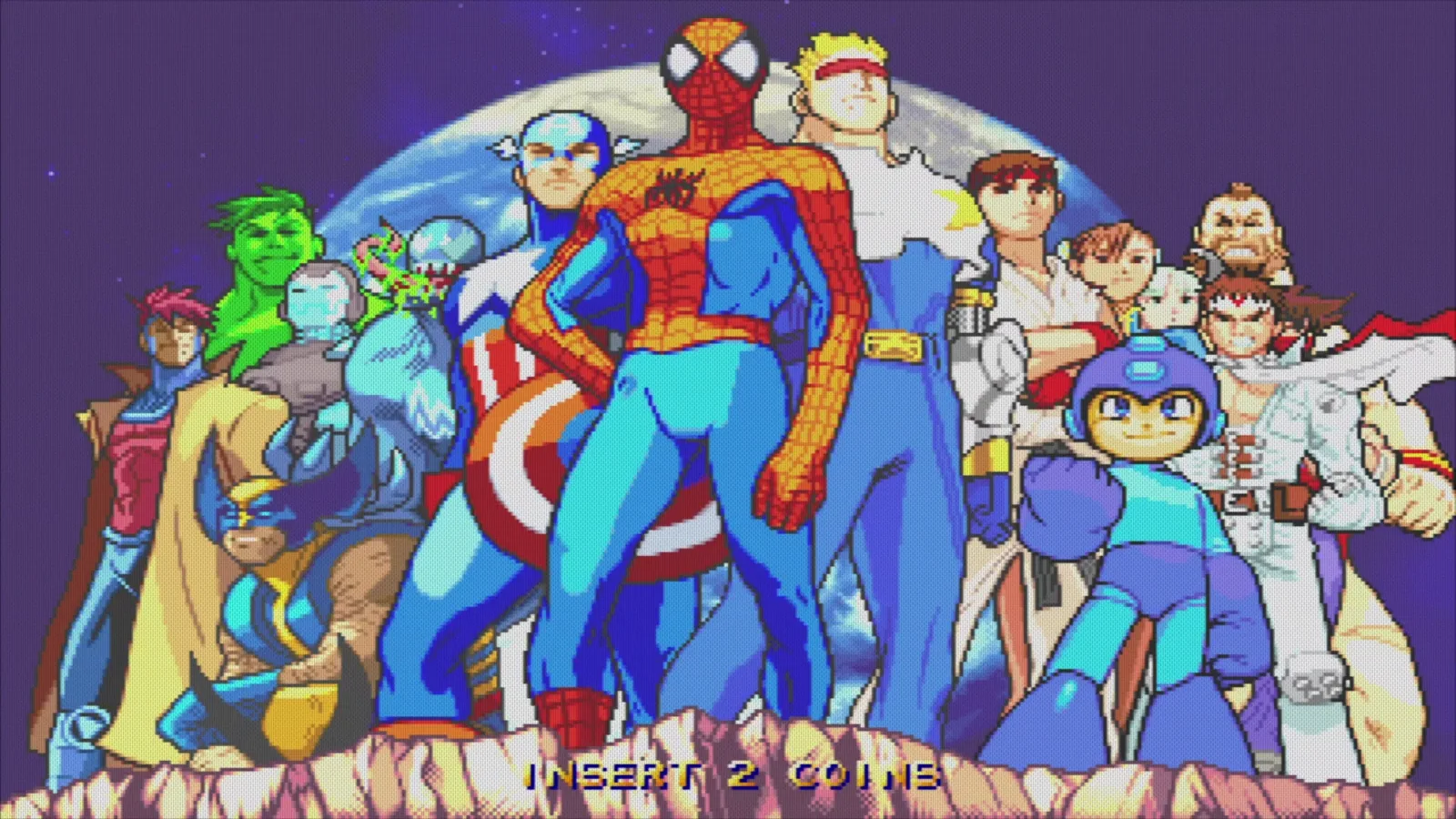
We had one arcade in our town. One.
And the day I walked in and saw the attract mode for X-Men vs. Street Fighter, I lost my fucking mind. Not in the cute way. In the way where you stand in front of a cabinet with no quarters in your pocket and just watch the demo loop, over and over and over again, like it might disappear if you blink.
Because there was Ryu. And there was Wolverine. On the same select screen. In the same game.
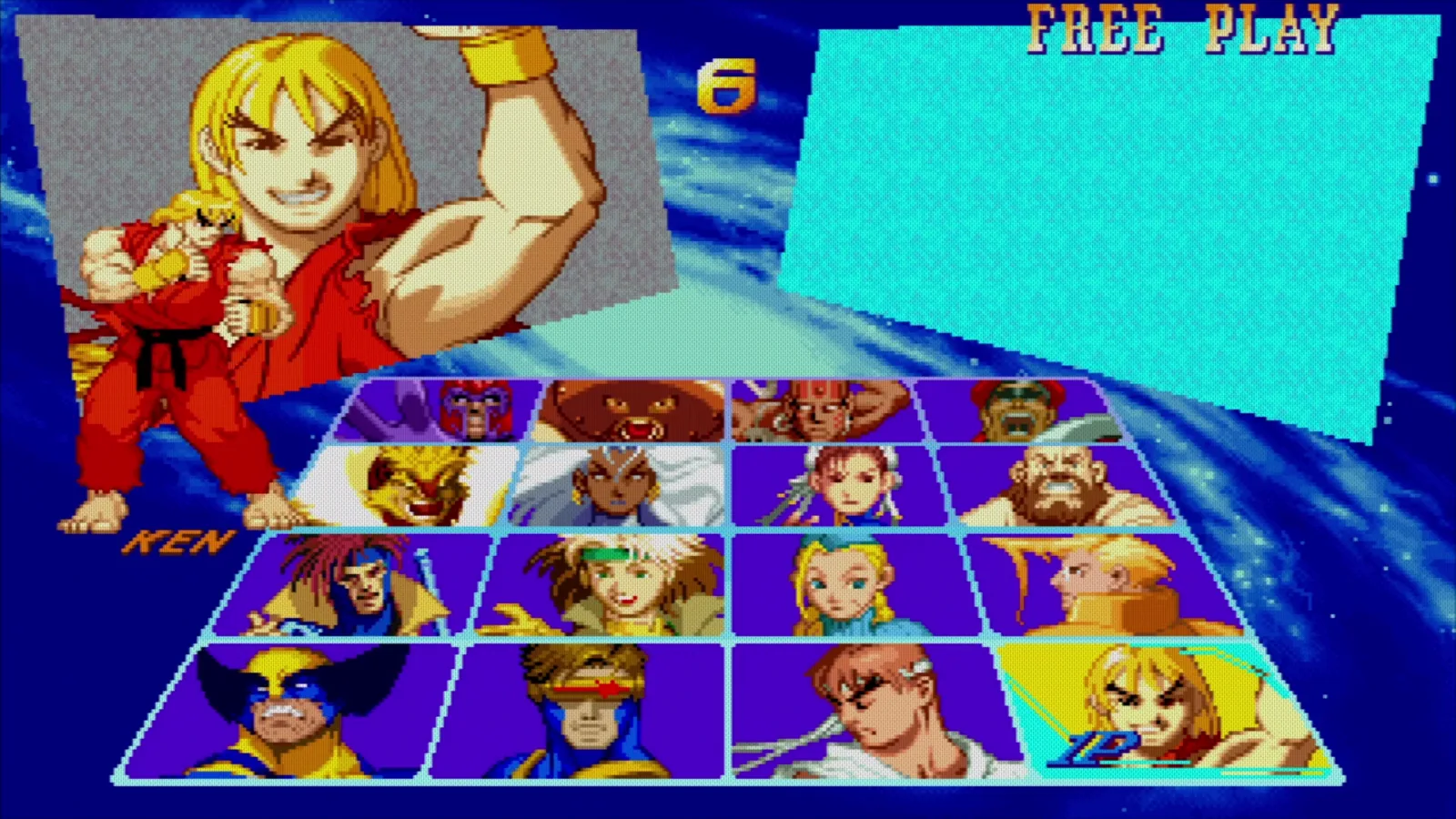
You have to understand where I was coming from. I was a kid in a mobile home in Kentucky, and calling me an outcast is being generous. There was no internet. There was nowhere to go and nobody to see. So when I wasn’t playing video games, I was playing with my action figures, and my action figures were Batman, Superman, the X-Men, and the Avengers, all in one big pile. Batman fought Wolverine. Superman fought Captain America. Nobody had to sign a licensing deal for that. I just did it.
And then Capcom went and did it for real, and charged a quarter for it.
What?
(That’s the whole video I made about this for my new YouTube channel, Random Select. This post isn’t the video. This is me getting to say the stuff I didn’t have time for, and the stuff I said on camera that I couldn’t stop thinking about afterward.)
The Recipe
Here’s my whole argument, and it fits in a paragraph.
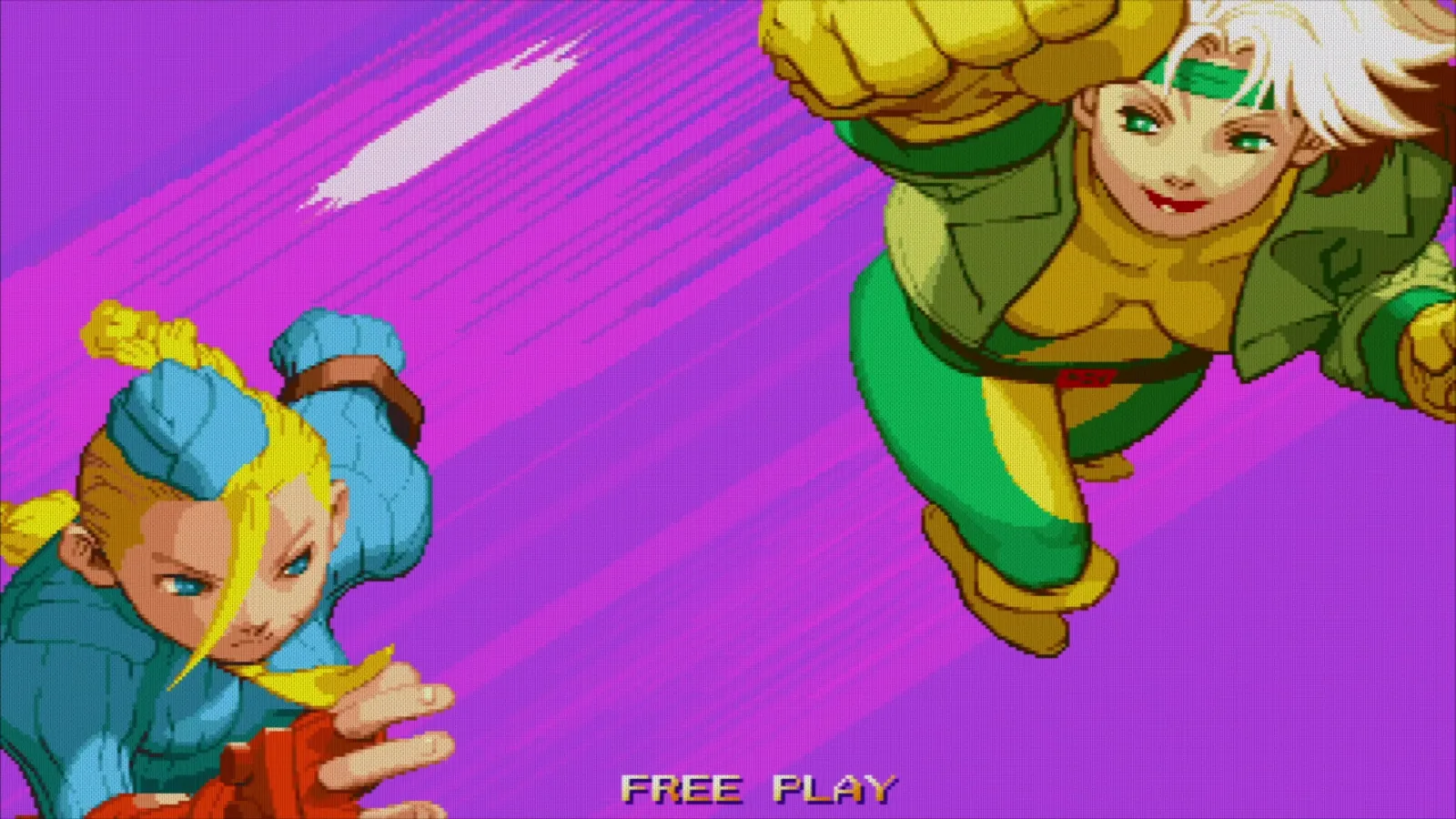
Take your two favorite things in the world. Not three. Not “well, it depends.” The two you’d have taken to a desert island if the island had electricity. For a kid in the ‘90s, that was very likely comics and video games. Put them together. Draw it right at the halfway point between anime and a Jim Lee splash page. Put the most banging music you’ve ever heard behind it. Hand it to the best video game company on the planet.
Then do it six times in six years.
X-Men: Children of the Atom. Marvel Super Heroes. X-Men vs. Street Fighter. Marvel Super Heroes vs. Street Fighter. Marvel vs. Capcom. Marvel vs. Capcom 2.
1994 to 2000.
That’s it. That’s the post. I could stop right here.
I’m not going to.
A Home for Loners
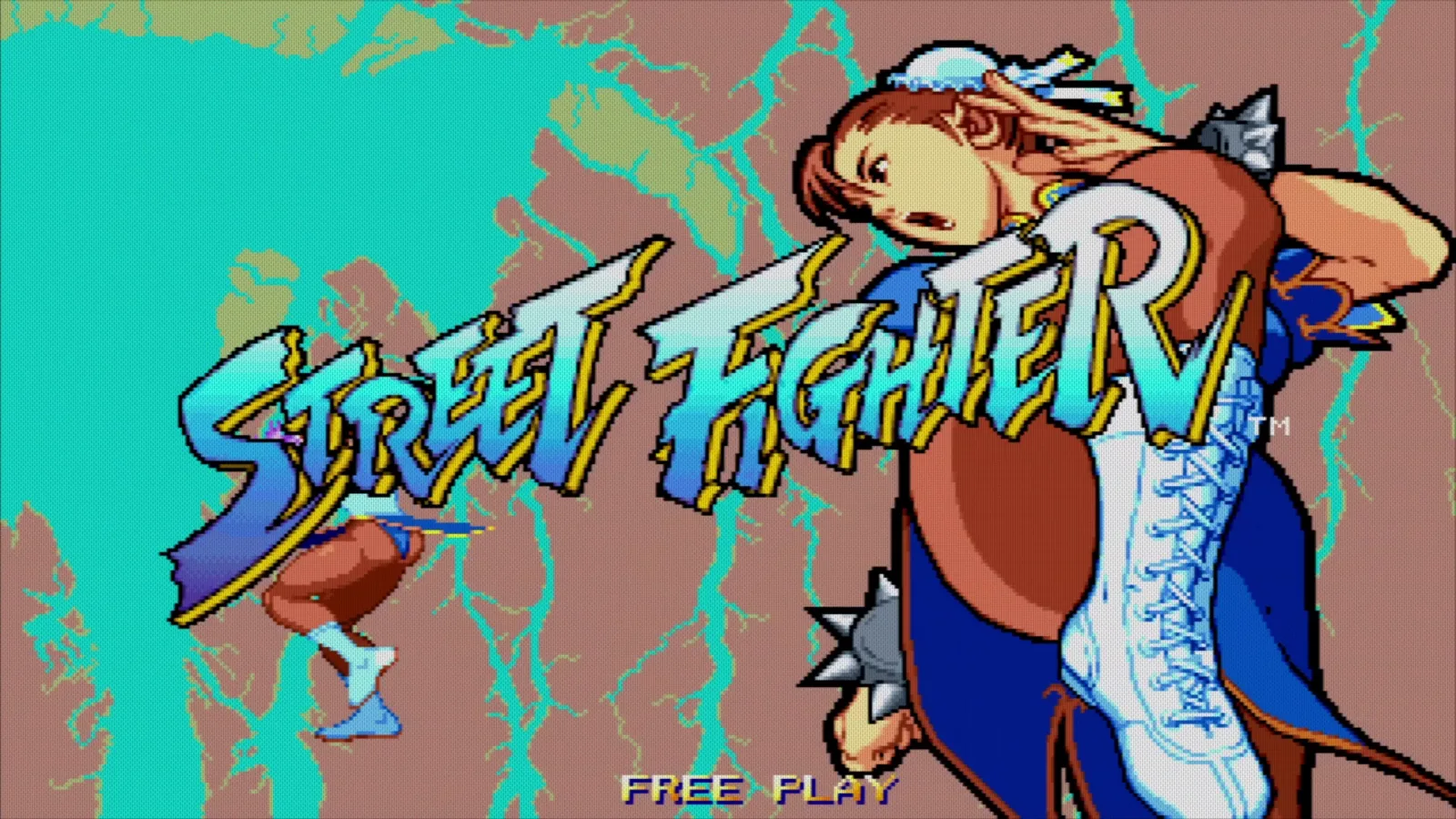
Before anybody says it: yes, I’m biased. I know it, I own it, and if you’ve read anything on this site, you already know Street Fighter was the first game that ever really meant something to me.
But I want to tell you WHY those two things, specifically, and not just “because I liked them.”
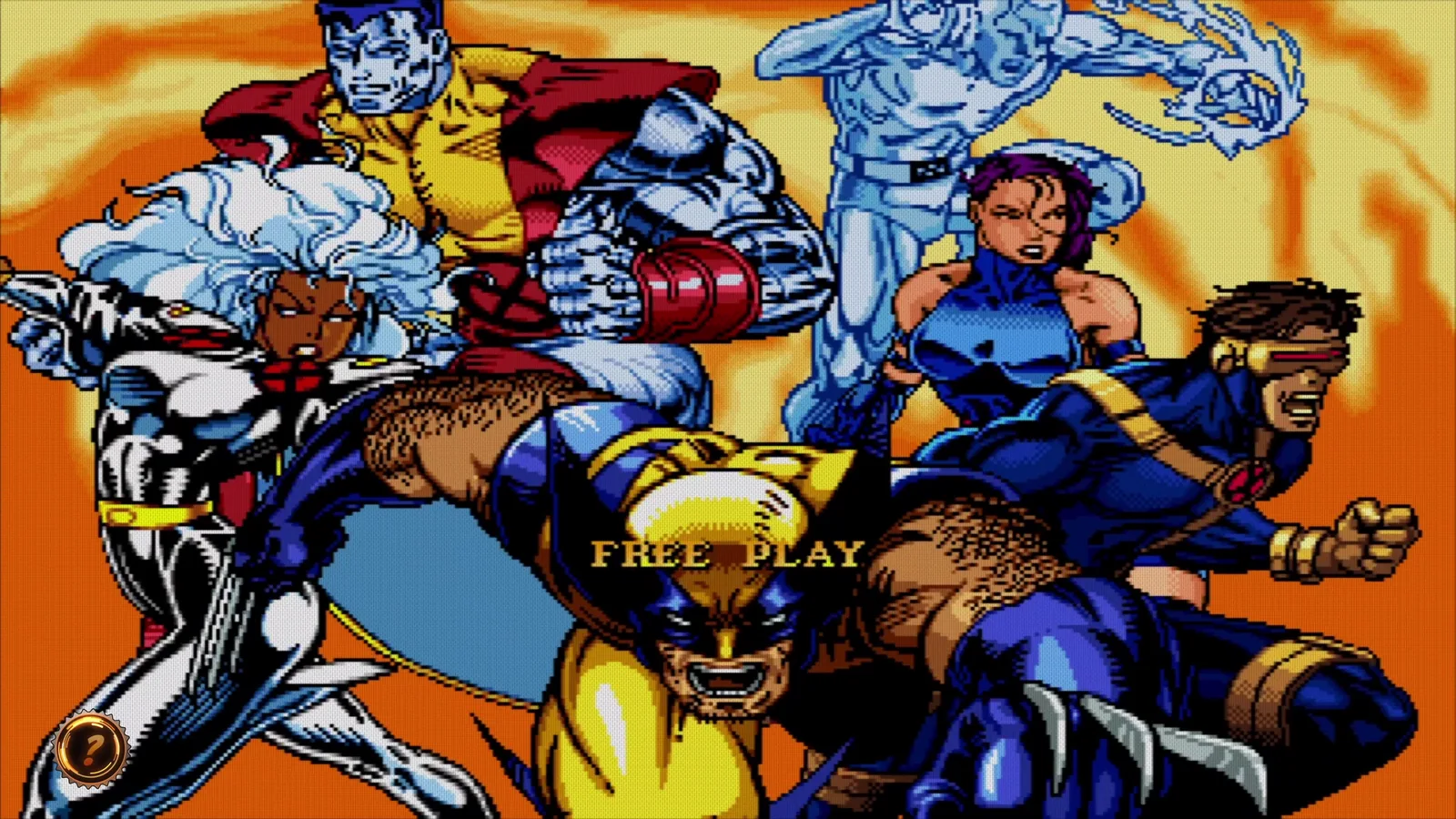
I made friends because of the X-Men. Actual friends. I’d walk up to some kid I didn’t know and say, “I love your shirt,” and it’d be Cyclops, or Wolverine, and that was it. That was the whole conversation it took.
For a loner like me, a team like the X-Men (or the Ninja Turtles, or the Power Rangers) was way cooler than a one-man show like Batman or Superman or Spider-Man. A team is a home. It’s a group of weirdos who found each other. It gave the outcast kids friends they didn’t have in real life, and it mattered.
Street Fighter was the same thing. A whole world map full of fighters, each one from somewhere, each one with a story, at a time when most games gave you one guy and a jump button.
So when two companies took the two biggest ensemble casts of my childhood and put them on one select screen, it wasn’t a crossover.
It was my two families moving in together.
Broke, Booming, and Out of Its Mind
Now, how did this happen? Because it really shouldn’t have.
In 1994, Capcom was THE fighting game company. Street Fighter II had been out for three years and had a new version every time you blinked. SNK was out there too, but SNK mostly lived in arcades and on the Neo Geo, which nobody had, because it was basically a home arcade that cost as much as a used car. Capcom had a sprite team nobody on Earth could touch, and a new arcade board, the CPS-2, built to push more sprites and more colors than anything they’d had before.
And Marvel? If you weren’t there for Marvel in the ‘90s, I don’t know how to explain it to you. X-Men #1 sold 8.1 million copies in 1991. For a comic book. Guinness still lists it as the best-selling single issue of all time. (I know, I know. Guinness also tracks the world’s longest fingernails. Still counts.) Jim Lee was drawing every X-Man like they were carved out of marble and dipped in neon, and every Saturday morning, the X-Men cartoon was on Fox with that theme song.
Hell, I still hum it.
The two companies already knew each other, too. Capcom made The Punisher in 1993, an arcade beat ‘em up where Frank Castle and Nick Fury punch their way through roughly four hundred guys. It was violent for its time, it looked great, and it meant Marvel and Capcom were already in each other’s phone books. (Yes. We had phone books.)
How the X-Men deal actually happened depends on who you ask, and the people who were there tell it two different ways. In one version, a Capcom planner named Katsuya Akitomo would not shut up about how huge the X-Men were in America until his boss, Yoshiki Okamoto, went and got the license. In the other, Okamoto did it himself, because Marvel wanted a way into Japan.
Either way, somebody at Capcom said “what if,” and God bless them for it.
And then Capcom got the cartoon’s voice cast. Cal Dodd, the Saturday morning Wolverine, growling out of an arcade cabinet. So Children of the Atom didn’t just look like the X-Men.
It sounded like them, bub.
Here’s the part that still gets me, though. By the middle of this run, Marvel was broke. Dead broke. The biggest comic boom in history went bust, sales fell something like 70% in three years, and on December 27, 1996, two months after X-Men vs. Street Fighter hit arcades, Marvel filed for bankruptcy.
So for the back half of this whole thing, the company that owned Spider-Man was in Chapter 11 and would hand him to anybody with a check. A dying comic company let a video game company play with all of its toys.
And the video game company happened to be the best in the world at exactly that.
The 50% Mark
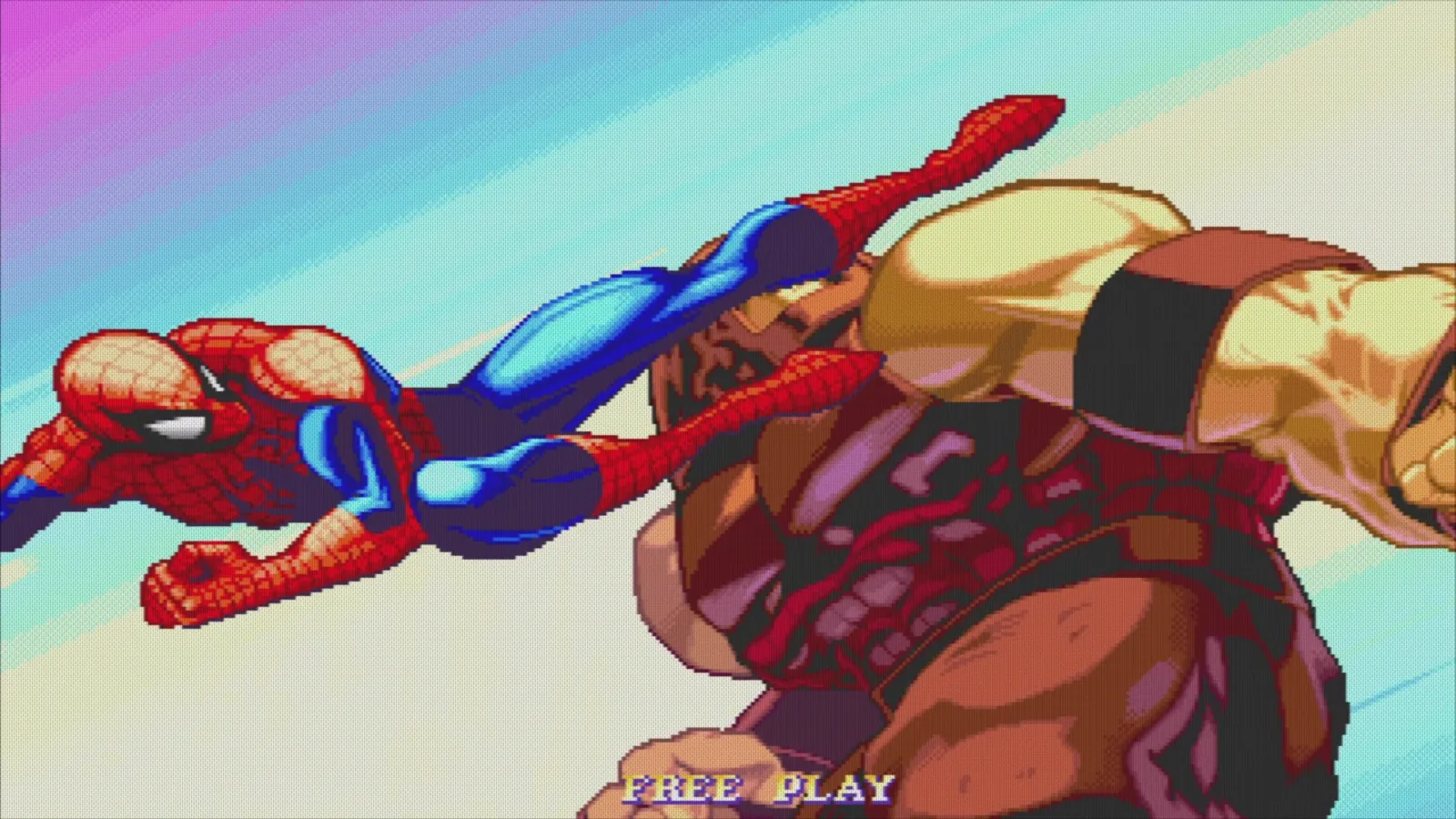
I keep saying “halfway between anime and comics,” so let me show my work.
Jim Lee’s Wolverine is all muscle and cross-hatching and pouches. An anime Wolverine, if one existed, would be all speed lines and big expressions and impossible hair.
Capcom’s Wolverine is both. Comic book body. Anime face. He moves like a cartoon and hits like a splash page.
And they did it for everyone. Cyclops. Storm. Strider. Morrigan. Magneto, who in these games is the single most intimidating sprite ever drawn, and I will not be taking questions. Every character looks like Capcom locked a comic artist and an anime studio in the same room and wouldn’t let them out until they agreed on something.
Nobody else was doing this. Nobody has done it since. Not because they can’t, but because the people who could don’t draw sprites anymore.
Storm’s Theme Sounds Like Weather
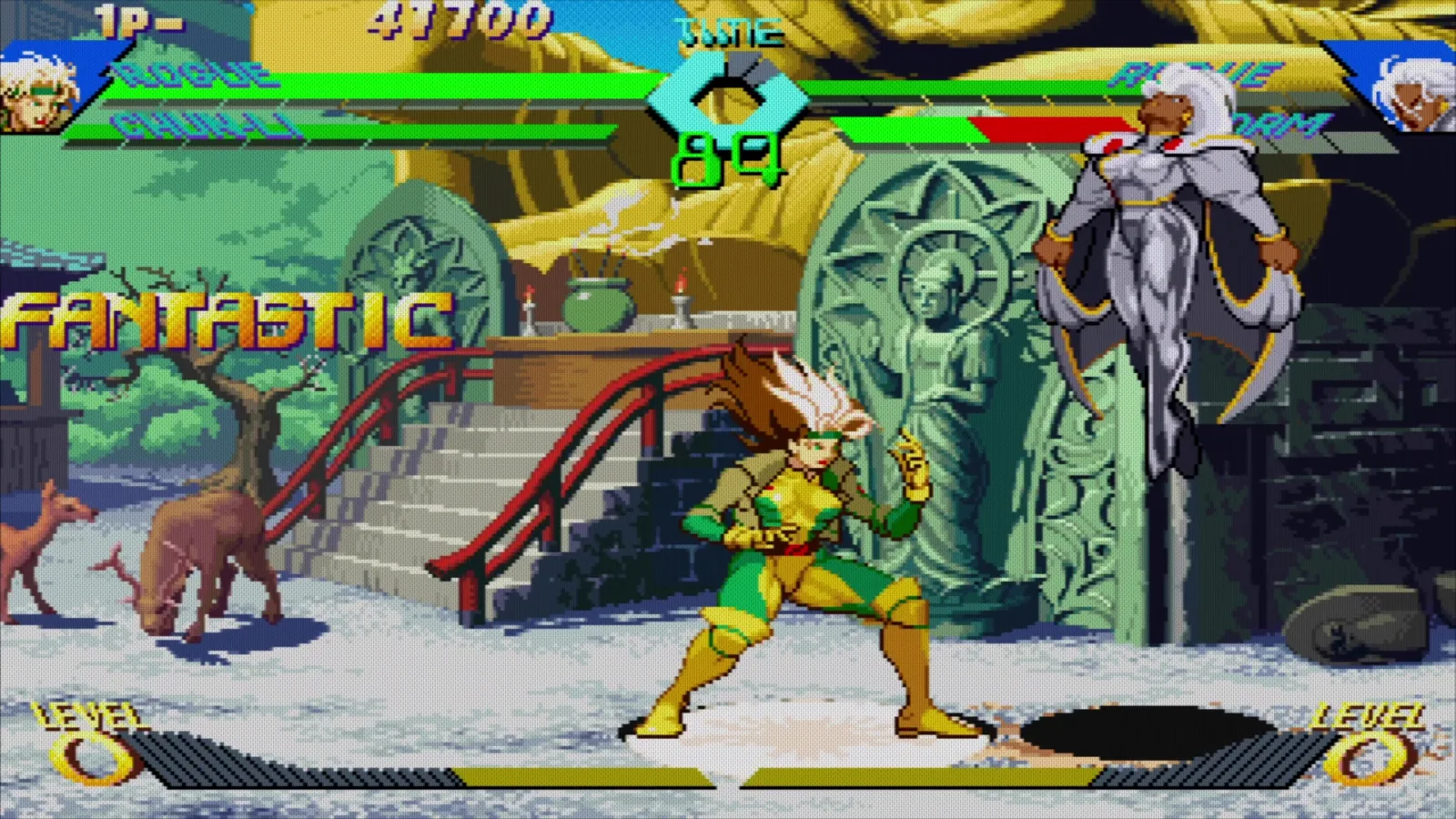
And the music. The freaking music.
If you’ve ever heard a Mega Man soundtrack, you already know what Capcom’s sound team was capable of in the ‘90s. In Children of the Atom, every character got a theme. Not a stage theme. A character theme. Wolverine’s theme sounds like Wolverine. Storm’s theme sounds like weather.
Then every game after it pushed harder.
And then Marvel vs. Capcom 2 came out, and they threw all of it away and hired a jazz band.
I’m serious. After five games of guitars and synths, the sixth one is jazz fusion with a guy crooning “I wanna take you for a ride” over the character select screen. The composer, Tetsuya Shibata, said he wanted something like “jazz, club, fusion,” blended with rock.
It makes no sense, dude. None.
But you know what else makes no sense? Jill Valentine, Mega Man, and Juggernaut on the same team. On paper, none of it should work. And twenty-six years later, “I wanna take you for a ride” is a chant people yell at each other at tournaments. It’s the sound of the game. Somebody at Capcom decided the sixth game should sound like an airport lounge in a dream.
And somehow, I don’t know how, they were right.
Six Times
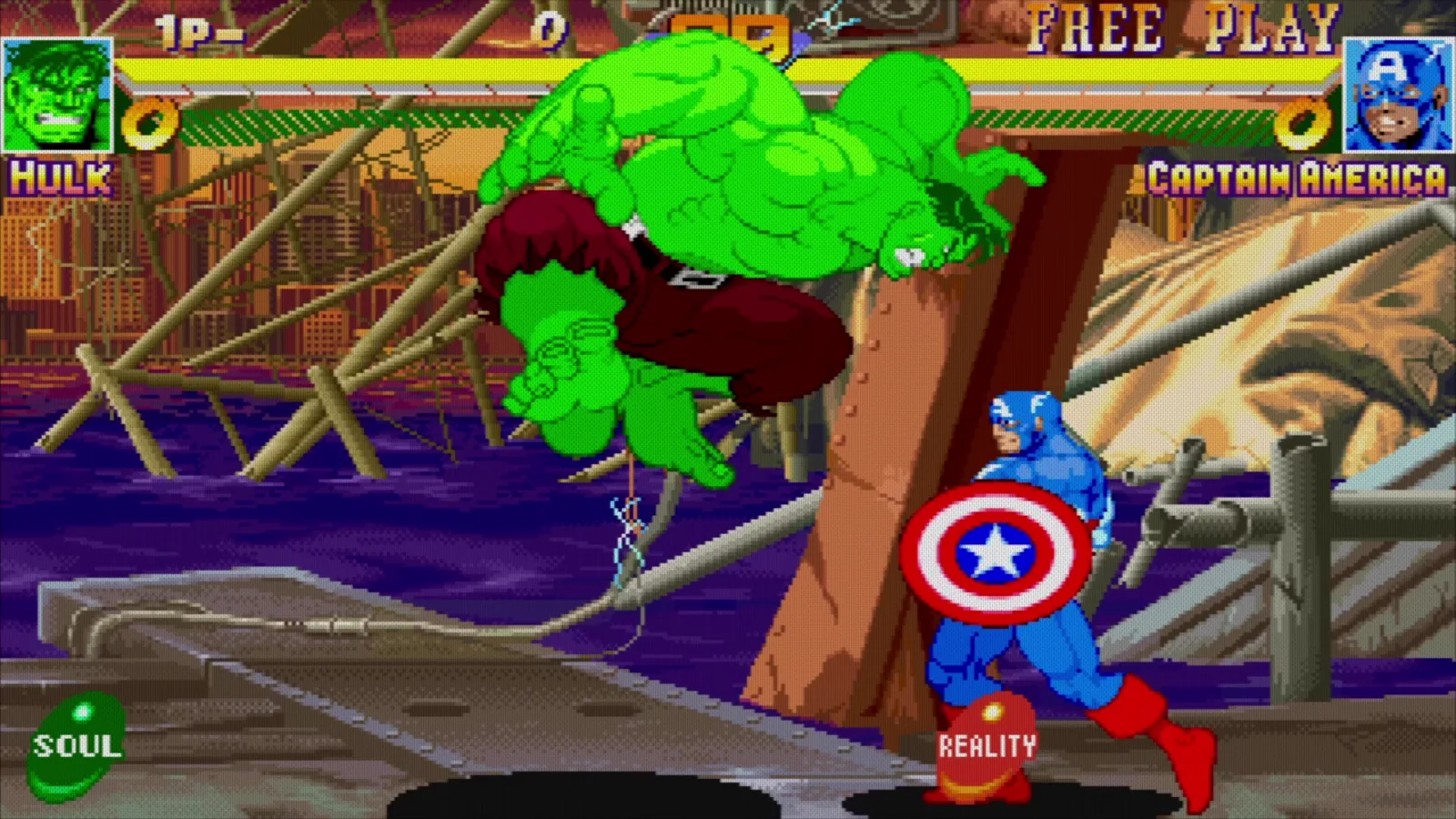
I went game by game in the video, so I’m going to go fast here. Each of these could’ve been the last one, and I’d have been happy.
Children of the Atom (1994). If you’d only ever played Street Fighter II, this game took your brain out, washed it in bleach, threw it in the air, and diced it like Fruit Ninja. You could jump to the top of the screen, and the screen followed you. You could juggle people in the air before they hit the ground. Cyclops fired a laser the size of a building. Capcom figured out that the X-Men aren’t martial artists, so either the game had to get bigger or the heroes had to get smaller.
They made the game bigger.
Marvel Super Heroes (1995). The Infinity Gauntlet, as a fighting game. You grab Infinity Gems mid-match and switch them on for a few seconds of power, and then Thanos takes every gem you’ve got and uses them on you. (It sucks. It’s supposed to.) That was 1995. Twenty-three years before Thanos snapped and everybody’s mom learned what an Infinity Stone was. And then there’s the roster. Capcom could’ve stopped at Spider-Man, Hulk, Cap, and Iron Man. Instead, they put in Shuma-Gorath, a green tentacle eyeball from Doctor Strange comics that maybe four hundred people on Earth had heard of, and made him one of the best characters in the game.
That’s not a company licensing a brand. That’s a company that reads the comics.
X-Men vs. Street Fighter (1996). The one from the arcade. The one where the tag team was born: two characters, swap them mid-fight, and if you’ve got the meter, both of them fire their supers at once and the screen just gives up. Ryu and Wolverine. Chun-Li and Storm. Zangief and Juggernaut. (What a fucking team.) If you only had a PlayStation, the port couldn’t fit tag mode in memory, so you got two characters and no swapping.
The ‘90s were cruel.
Honestly? If this had been the last one, I would never have needed another video game as long as I lived.
It wasn’t the last one.
Marvel vs. Capcom (1998). Not “vs. Street Fighter” anymore. Vs. CAPCOM. The whole company. Strider. Captain Commando. Morrigan. Fucking Mega Man, with Rush and Beat following him around. And the final boss is Onslaught, Professor X and Magneto fused into one Omega-level nightmare, from a comic storyline that had wrapped up only fifteen months earlier. Capcom was reading the same comics you were, the same month you were. Imagine Nintendo dropping something like Smash Ultimate in the ‘90s, with a comic book art style, a soundtrack that slaps, and arcade cabinets.
Brother.
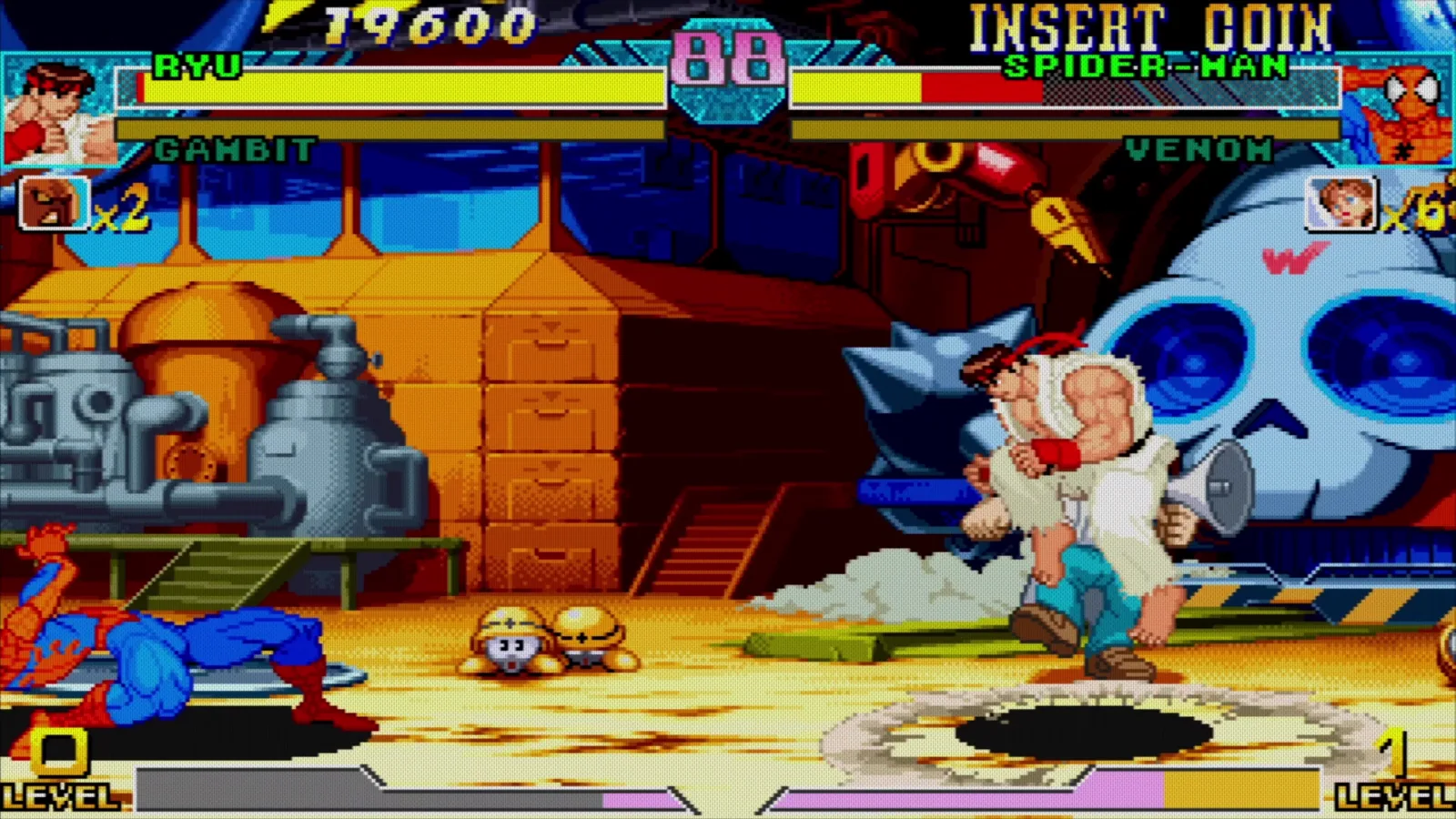
(And Smash didn’t even come out until a full year after this. Capcom got there first, with Spider-Man.)
Marvel vs. Capcom 2 (2000). Fifty-six characters. Brother, listen to me. FIFTY-SIX. Three on three. Everybody from the five games before it, plus Jill Valentine, my dearest, plus Cable, plus Cammy, plus a cactus named Amingo, plus a guy in a giant mech, plus a monkey, plus a pirate named Ruby Heart they made up just for this game. Plus Marrow.
(No relation.)
Six games. Six years. And every single one of them is the recipe.
My Favorite Is the One Everybody Skips
I left one out of that list on purpose.
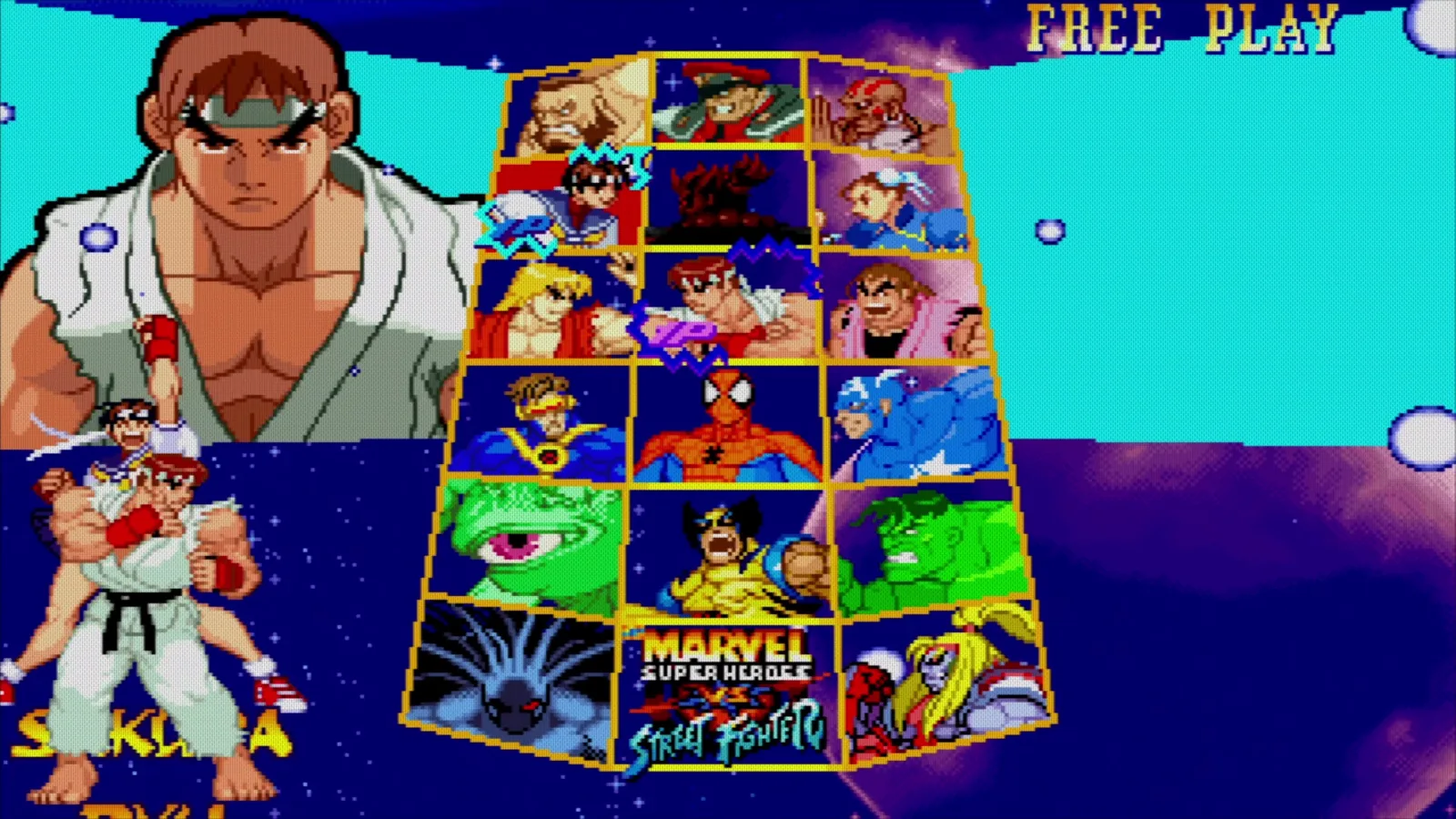
Marvel Super Heroes vs. Street Fighter, from 1997, is my favorite of the six, and it’s the one most people skip. I get why. It’s the bridge game. Same engine as X-Men vs. Street Fighter, half the roster swapped out, and a LOT of reused sprites from the games before it.
None of that matters. This is the most beautiful game in the series, and I’ll die on that hill. It took the art style the first four games had been building and refined it into something that still looks incredible. I’d argue it has the best presentation of any Marvel vs. Capcom game, period, and that it set how the series would look and feel from then on.
It gave us the assist, too. Not the tag, the ASSIST. Tap a button, your partner jumps in, does one move, and leaves. Every assist call in every tag fighter since starts right here.
And it’s weird, which I love. Mech-Zangief, who can’t block and can’t be knocked down, which is pure nightmare fuel. Shadow, who is Charlie Nash turned into a brainwashed Shadaloo experiment, which is a lore drop in a fighting game nobody asked for and I ate it up. And in Japan, a real-life comedian named Noritake Kinashi playing Norimaro, a nerd with a camera and a bag of school supplies, fighting Spider-Man. Kinashi even voiced him.
He never made it to America. The reports say rights issues. I understand. I also think everyone involved was wrong.
By game four, Capcom wasn’t making a Marvel game anymore. It was making a Capcom game that happened to have Marvel in it. And a broke Marvel just let them.
That’s the window. And this is the game where it was open the widest.
Everybody Copied Their Homework
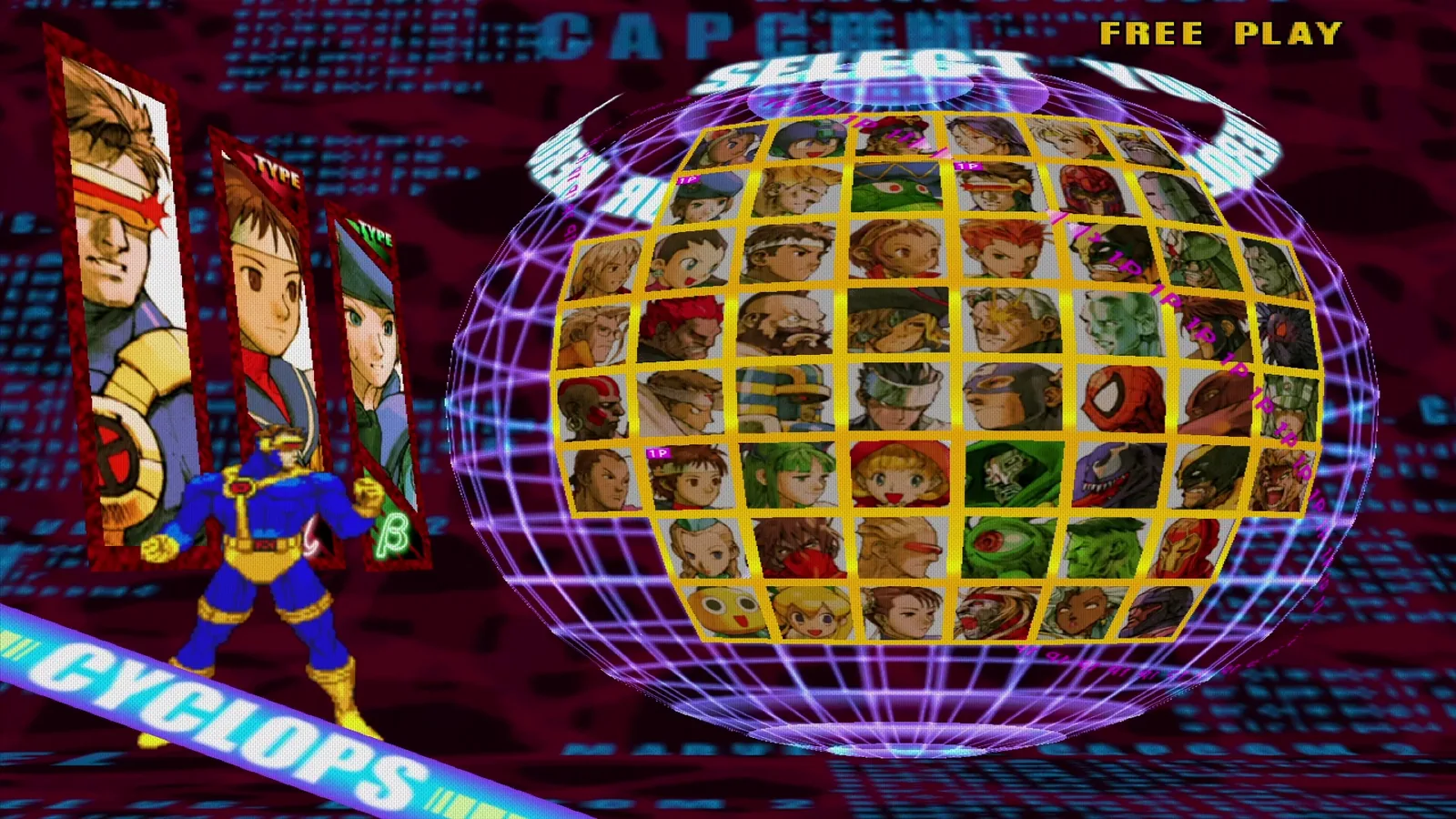
I don’t want this to sound like a guy who just liked something when he was a kid. This series changed what fighting games are. It changed how crossovers work. It changed what a guest character even means.
Super jumps. Air combos. Power-ups mid-fight. Tag teams. Double supers. Assists. Three on three. Every one of those started in one of these six games.
Marvel vs. Capcom 2 was on the main stage at Evo every single year from 2000 to 2010, starting back before the tournament was even called Evo. Justin Wong won seven of them. In 2007, at a tournament in Columbus, Ohio, IFC Yipes grabbed the mic mid-match and screamed “MAHVEL, BAYBEE!” and the fighting game community has never once stopped saying it. Capcom even put a nod to it in Marvel 3. The game was so loud its own fans became part of it.
Skullgirls took its tag system, assists, and controls straight from Marvel 2. Dragon Ball FighterZ, the biggest anime fighter of the last decade, built its teams out of this series. Marvel’s newest fighter, Marvel Tōkon, is four on four with assists, and everybody who plays it says the same thing: it’s Marvel vs. Capcom wearing a different name.
And in 2025, Evo put Marvel 2 back on the main stage for the first time in fifteen years. More than five hundred people entered a twenty-five-year-old game.
That’s not nostalgia. That’s a game nobody ever actually beat.
An NES Built Into a TV
Let me slow down for a second.
I didn’t grow up with money. I’ve said it on this blog before. We were never the kind of family that could afford a console when it was new, and the arcade cost quarters I usually didn’t have.
My first system was an NES built into a TV. I got a Super Nintendo one Christmas, with A Link to the Past in the box, and it was about a year after that before I ever played Street Fighter II. I didn’t get a PlayStation until Tomb Raider was already a Greatest Hit in the green case. It was the first 3D game I ever played at home, and I still remember exactly how that felt.
When you’re a kid and you don’t have much, the things you do have aren’t things. They’re the whole world.
Street Fighter wasn’t a game to me. It was a place I went. The X-Men weren’t characters. They were who I wanted to be when I grew up, because they were different, and it was fine.
I was different, and it wasn’t.
So Ryu standing next to Wolverine wasn’t a crossover. It was the two worlds I lived in agreeing to be one world. I don’t think I can ever fully explain that to somebody who wasn’t there. I tried for thirty-five minutes on camera, and I’m trying again now.
But that’s what it meant.
They Stopped
Okay. Back up. Time to complain.
Anybody who reads this blog (all three of you) knows I spend a lot of time shitting on Capcom. Resident Evil, mostly. Not today. For six games in six years, Capcom was the best video game company on the planet, and I don’t think it’s close. My custom arcade cabinet has the Capcom logo all over it, covered in Marvel vs. Capcom characters. I love this company.
My complaint is simple.
They stopped.
After Marvel 2, Capcom lost the license. Nearly a decade of lawyers. They didn’t get Marvel back until the summer of 2008, and Marvel vs. Capcom 3 didn’t come out until February 2011. Eleven years.
And when it came back, it came back in 3D.
A lot of people love the way Marvel 3 looks. I’m not one of them. It’s still a good game, but the 50% mark, the sprite work that made the whole thing look like a dream, was gone, swapped for cel-shading with really dark shadows and really bright lights. It honestly hurts my eyes. You just can’t draw that kind of goodness in polygons. Nobody’s figured out how.
And by the time Infinite came out in 2017, it didn’t even look like a Marvel game. It looked like a Marvel game’s cousin who does the books for Temu.
I get why. Sprites that good cost a fortune. The arcades died. Marvel wasn’t broke anymore. Disney bought Marvel in 2009, right in the middle of Marvel 3, and in 2012 it let Capcom’s license run out so it could make its own games. Disney doesn’t let anybody play with the toys.
(Except Square Enix, apparently. Anyway.)
The window that let a Japanese comedian with a bag of school supplies fight Spider-Man is closed, and it’s not opening again.
I wanted more. I always want more. That’s my complaint every time.
But this time I’m not asking for more. I’m just telling you what we had.
#FreeMVC2
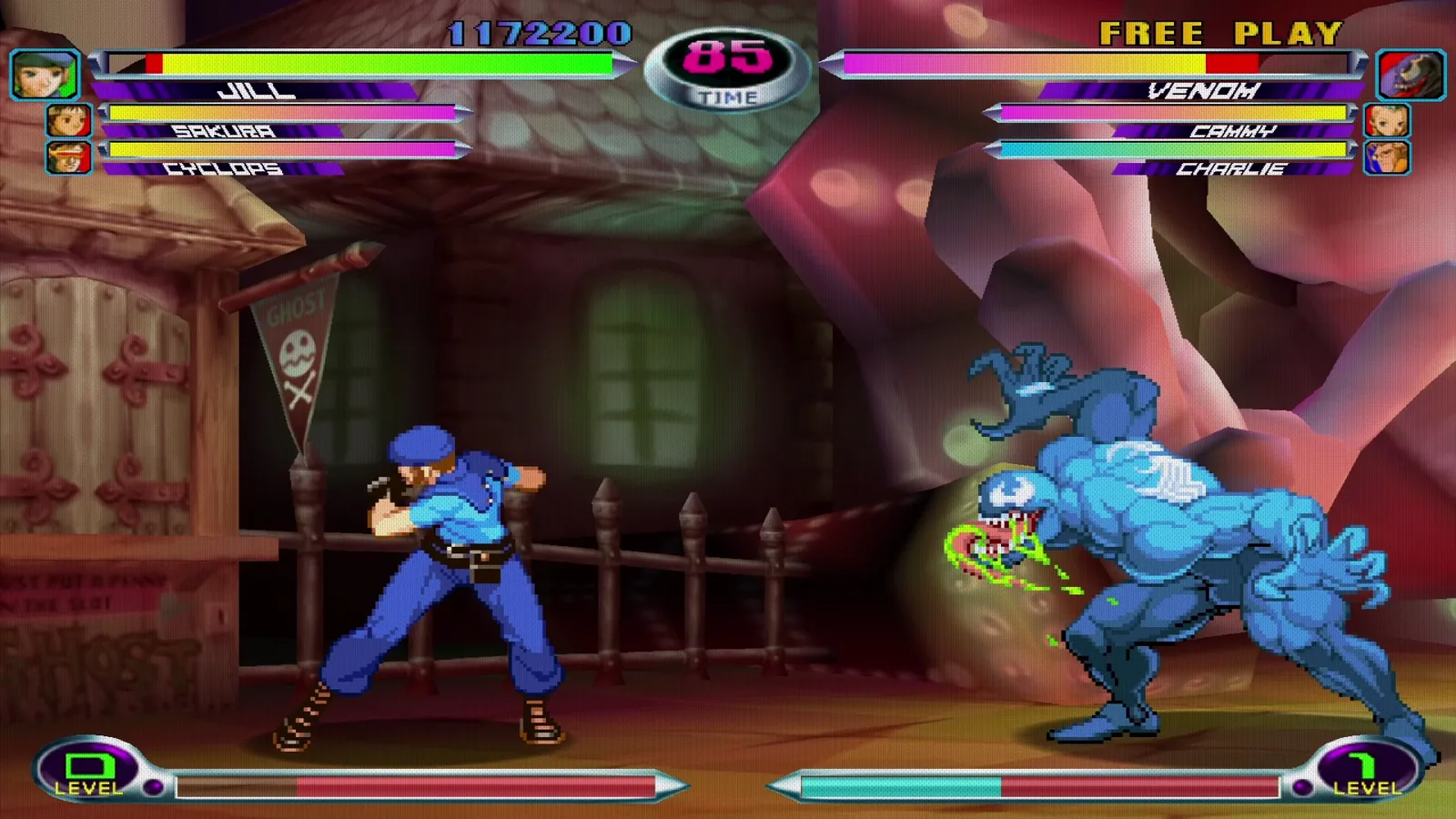
And here’s the good news: you can play all six of them right now. That part took a fight.
For years, you couldn’t buy Marvel 2 legally anywhere. If you didn’t have a Dreamcast, you basically couldn’t play it. The digital version got pulled over licensing, and that was that.
(This is why we buy physical games, people.)
Then a guy named Maximilian Dood got tired of fucking waiting. If you don’t know Max, you should. He built half his channel on this series, starting with Assist Me back in 2011, a show he made just to teach people how to play Marvel 3. I’ve followed him since Injustice. In August 2021, he started #FreeMVC2, and he hammered it for years. At Capcom. At Marvel. At anybody who would listen.
On June 18, 2024, right in the middle of a Nintendo Direct, Capcom announced the Marvel vs. Capcom Fighting Collection: Arcade Classics. All six games, plus The Punisher. If you want to know what this stuff means to people, go watch Max’s reaction to that reveal. It’s a grown man completely losing his mind in real time, and I felt every second of it.
I won’t tell you Max made it happen. He won’t tell you that either, and nobody at Capcom has said so. But he started it, he fought for it, and then it happened.
I know which way I’m leaning.
September 12, 2024. Twenty-four years after Marvel 2, they finally let us take the whole thing home.
Mahvel, Baybee
I don’t live in a mobile home in Kentucky anymore. I’ve got a custom arcade cabinet with the Capcom logo on it now, and I don’t need quarters.
But some part of me is still standing in that one arcade, watching an attract mode loop with no money in my pocket. Ryu on one side. Wolverine on the other. My action figures, finally fighting for real.
Two favorite things. Drawn perfectly. Scored perfectly.
Six times.
That’s what it was.