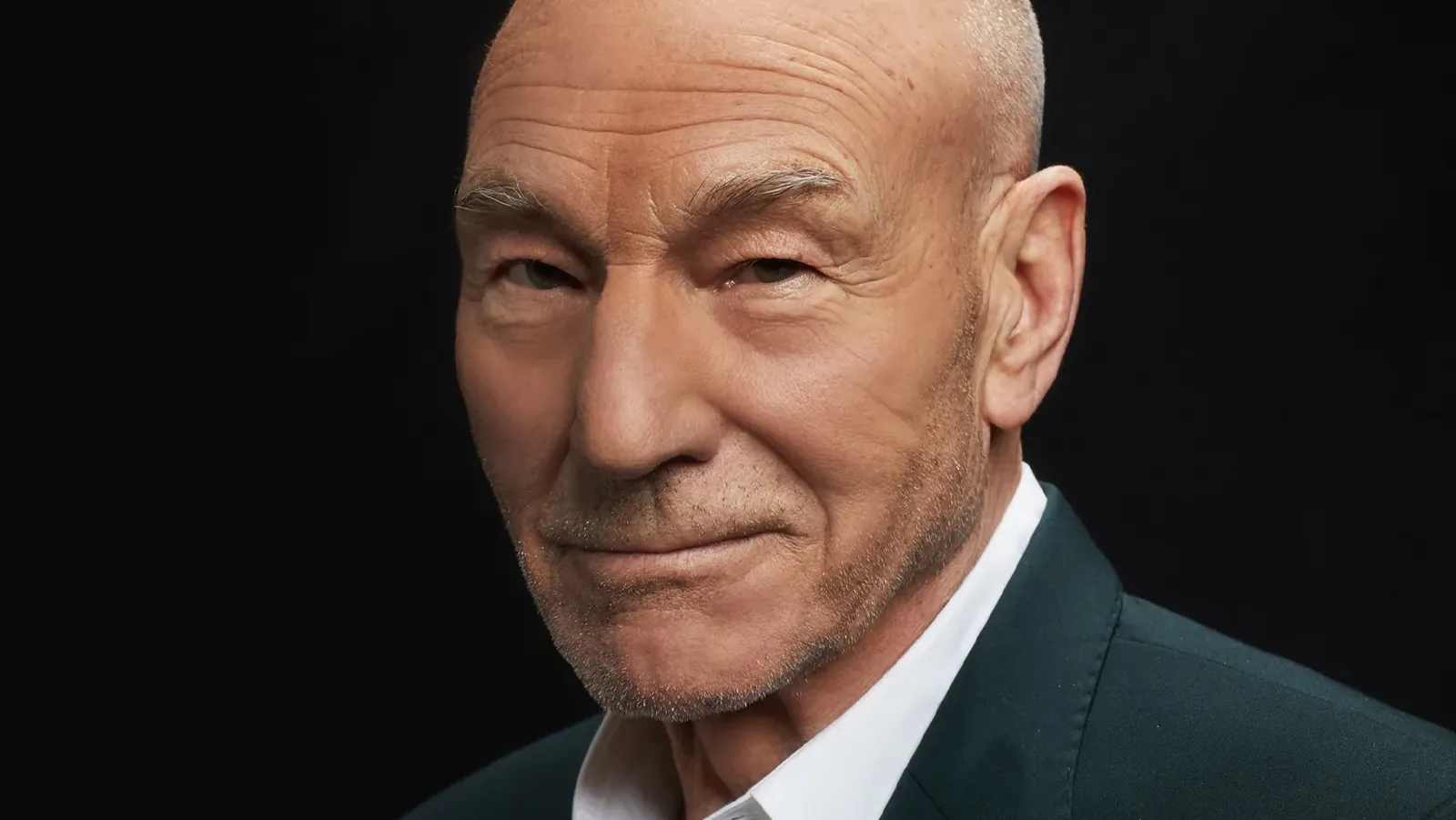
Sir Patrick Stewart was not just an actor to me.
He was my favorite actor for the whole of my young life. (He also remained, in my opinion, the sexiest man alive well into his eighties, and I will not be taking questions.) He helped raise me, and he never knew it. As Picard. As Xavier. And on some level simply as himself: in his speech, in his talent, in his eyes.
He died on October 28, at his home in Los Angeles. He was 86.
He was born in 1940 in Mirfield, Yorkshire, to a weaver and a soldier, in a house without much money in it. A teacher named Cecil Dormand put a copy of Shakespeare in his hands and urged him to perform. He left school at 15 and spent about a year as a newspaper reporter, where one of his jobs was writing obituaries.
I keep thinking about that while I write this one.
He trained at the Bristol Old Vic Theatre School, made his professional debut in 1959, and joined the Royal Shakespeare Company in 1966. He stayed for sixteen years and more than sixty productions. Before ultimately going on to become one of the most beloved actors to ever grace both film and stage.
The Father I Fell Asleep To
I have always been a night owl. I can lie down at 11 and not fall asleep until 5.
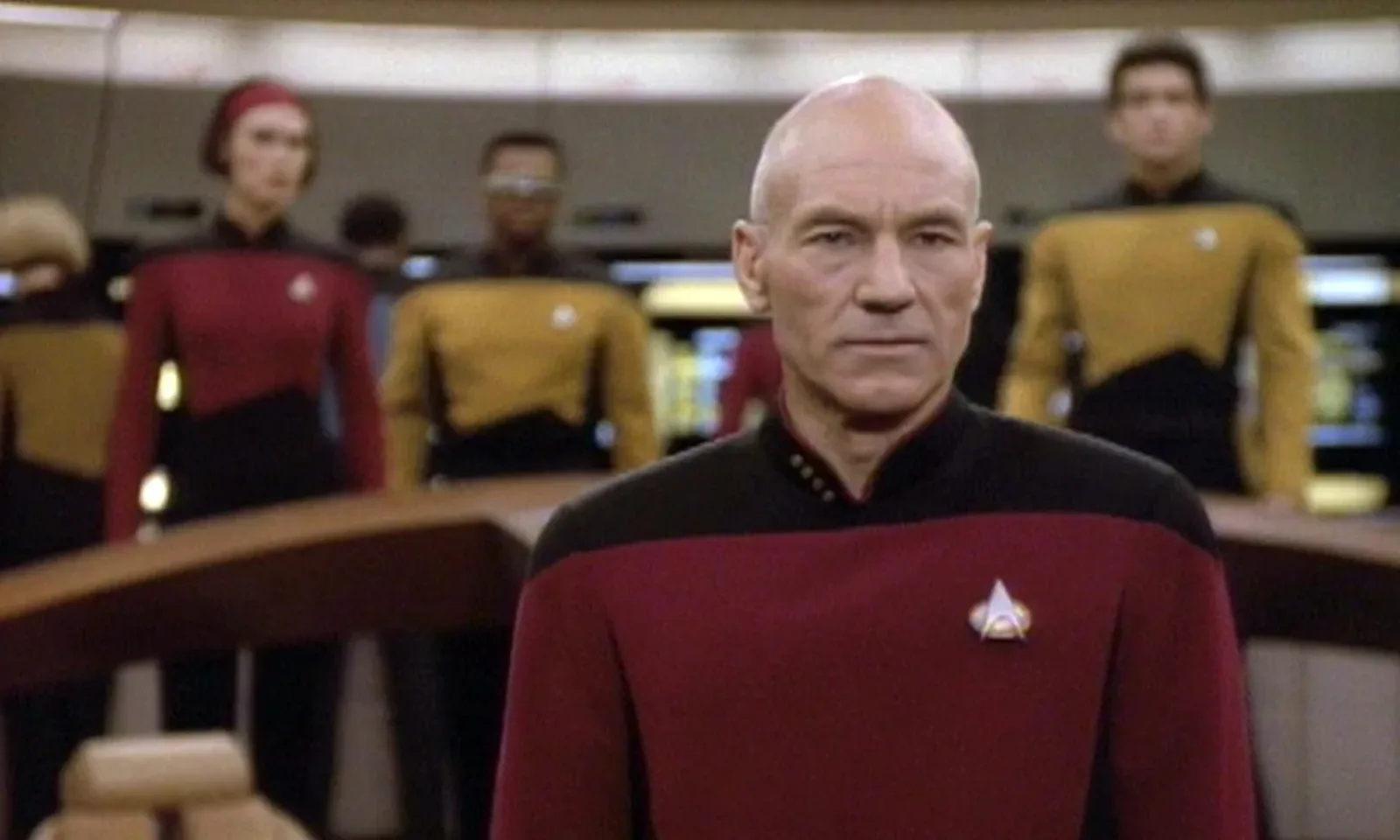
Back then, I didn’t have a bedroom of my own. I slept in the living room of our place in Kentucky, on a futon that was also our couch, and TNN had Star Trek: The Next Generation. So I spent all of those nights with Picard, and Riker, and Data, and LaForge.
I regret nothing.
Over and over, in the dark, that voice would come up over the stars. Space: the final frontier.
And that voice almost didn’t get the job.
The producer Robert Justman saw him at a literary reading at UCLA, but Stewart was skeptical of the show and reluctant to sign its six-year contract. The show wasn’t sure about him, either. Gene Roddenberry reportedly objected to a bald English guy taking over. It took audition after audition, and flight after flight between London and Los Angeles, and for the final audition, they wanted him in a wig. His then-wife, Sheila, boxed one up in England and British Airways flew it to Los Angeles. “I do not know if my hairpiece flew first class,” he wrote in his memoir.
He read one scene in it. And the head of Paramount Television reportedly came back with one of the best notes in the history of television: “Go with the English guy, but lose the wig.”
So at 47, a Shakespearean actor from Yorkshire sat down in the captain’s chair, bald head and all. Seven seasons. Four movies. And at 79, three more seasons of Star Trek: Picard.
Thank God. Because that chair ended up in a living room in Kentucky, across from a kid on a futon who should have been asleep.
Night after night, he taught. Honor, loyalty, intellect, poetry, love. He was my introduction to Shakespeare, and Homer, and elaborate, purple prose, all in a voice that could melt the gates of heaven.
He taught me that strength was never loud. That the strongest person in the room, and often the smartest, is usually the quietest one in it. And by contrast I—on the daily—saw my dad yelling, and screaming, and cursing at his wife and son.
He taught me that human rights belong to the person, and can never, at any time, infringe on the rights of others.
And he taught me that you can do everything right and still lose, and that it doesn’t mean you’re done for. “It is possible to commit no mistakes and still lose,” he tells Data. “That is not a weakness; that is life.”
I already knew what a man with a temper sounded like. What I didn’t know, until a bald Englishman told me at three in the morning, was that a man could sound like this.
Picard’s voice was the father I fell asleep to.
Xavier Had to Feel Like Home
I was a mutant, in every way but genetically.
At my school, I was basically Hank McCoy: a hulking, wall-running, furry blue mutant with tusks who liked to read and write, in a school full of people who couldn’t do either.
So X-Men was never just a comic to me. Xavier’s School is the only school, ever (except maybe Hogwarts), that I would have happily woken up for every morning. And the reason was the headmaster. Xavier made it clear that it wasn’t just a school. It was a school and a home, and it felt a lot more like the second one. A weird freak like me would have loved it there.
That’s why the most important thing about Charles Xavier was never the bald head, or the wheelchair, or the psychic powers. The most important thing about Charles Xavier is that he has to feel like home. He has to feel safe.
Sir Patrick Stewart felt safe. He felt warm. He felt like a father and a friend at the same time.
I can’t tell you what I felt the first time I saw him as Xavier, because I don’t remember it. He just always was. Long before he was ever cast, when all we had were the comics and the cartoon, we ’90s kids already saw him in that chair. Xavier was as much Patrick Stewart as the other way around.
So I can’t remember my reaction to the casting, and I think that says everything. There was nothing to react to. He simply was. It is still, to this day, one of the greatest castings in the history of comic book adaptations. He played the part for more than twenty years, from X-Men in 2000 through Logan and beyond, and we get him one more time in Avengers: Doomsday this December.
My friend Dillon and I built our entire friendship on a select few things, and in the beginning it was KISS and X-Men. All of those days with the live-action movies, and the X-Men Legends games, with Stewart himself voicing Xavier, and Star Trek. Picard was our captain. Xavier was our professor. And Patrick was there for both.
We never fought over who was who. Dillon was always Magneto. I was always one of the X-Men.
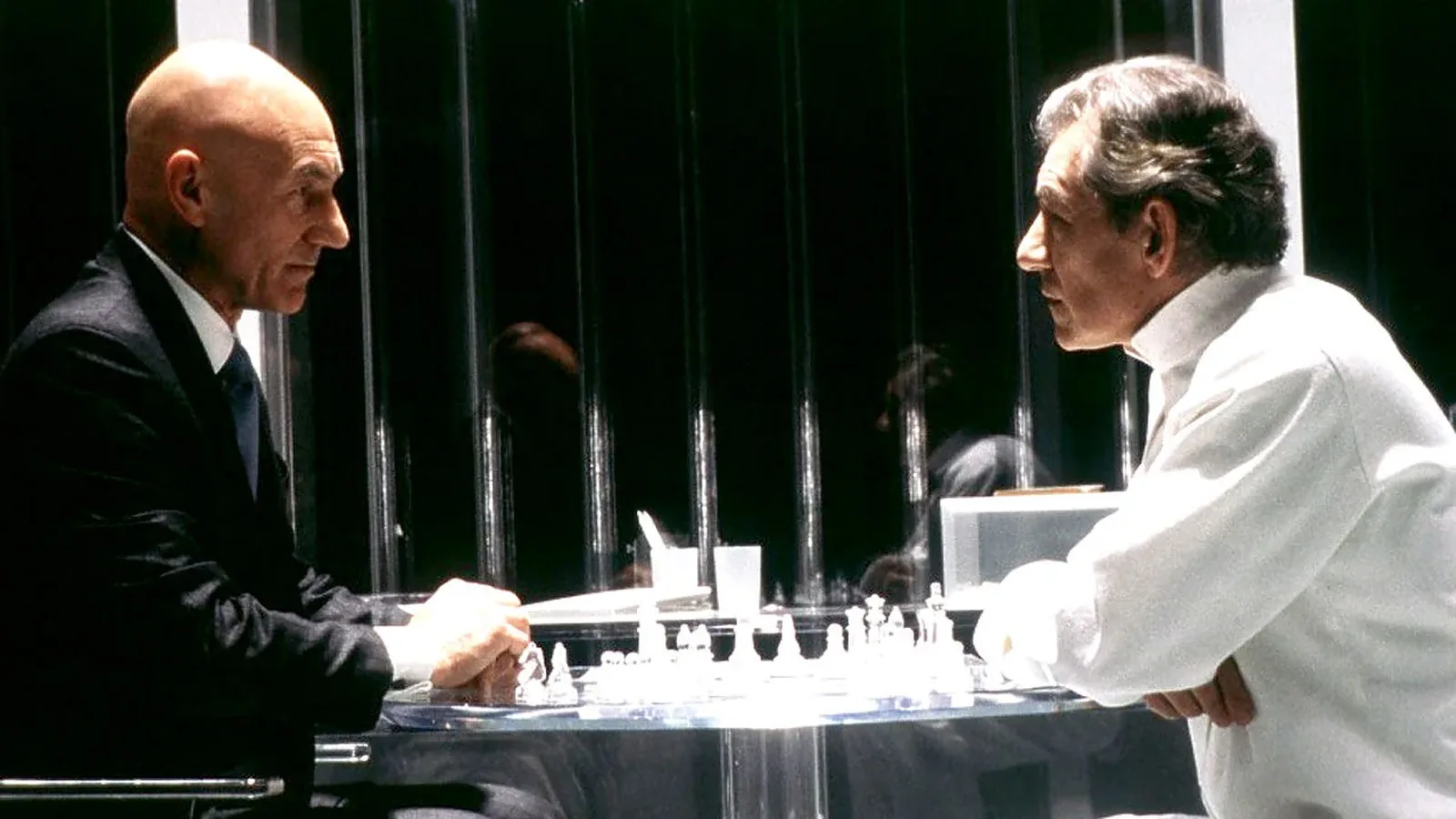
But there was always that mirror. We kind of figured that’s how we’d end up in old age: sitting across from one another, playing chess.
I’ve moved thousands of miles away since then. I still see us that way. And it’s never the comic I see, or the cartoon.
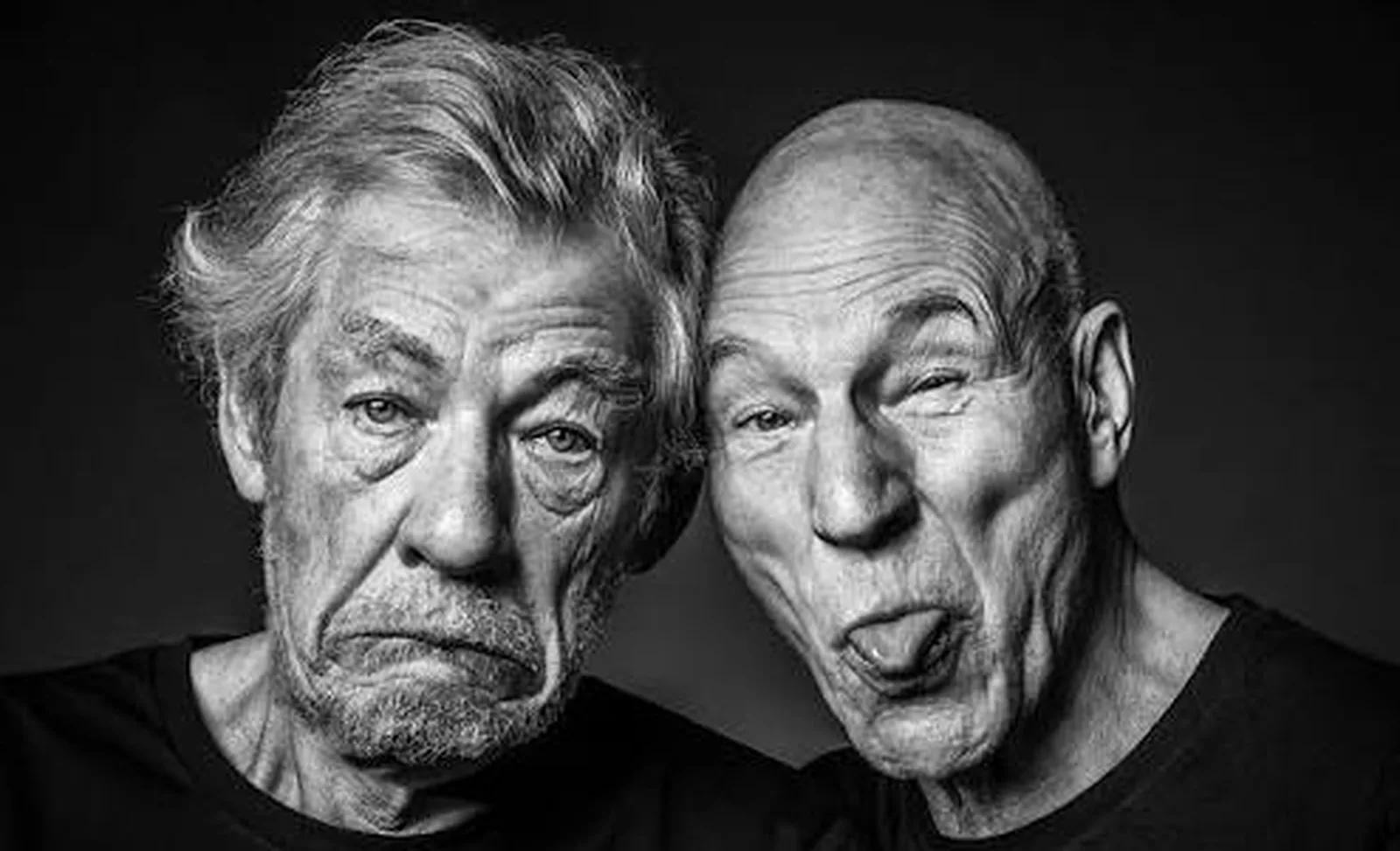
It’s always Stewart and McKellen.
That Beautiful Shakespearean Bastard
Then I got older, and I learned that this great man of the theater was a lover of comedy and raunch.
I started hearing that voice in cartoons I never would have expected. He did Family Guy. He did 122 episodes of American Dad! He showed up for Mel Brooks in Robin Hood: Men in Tights.
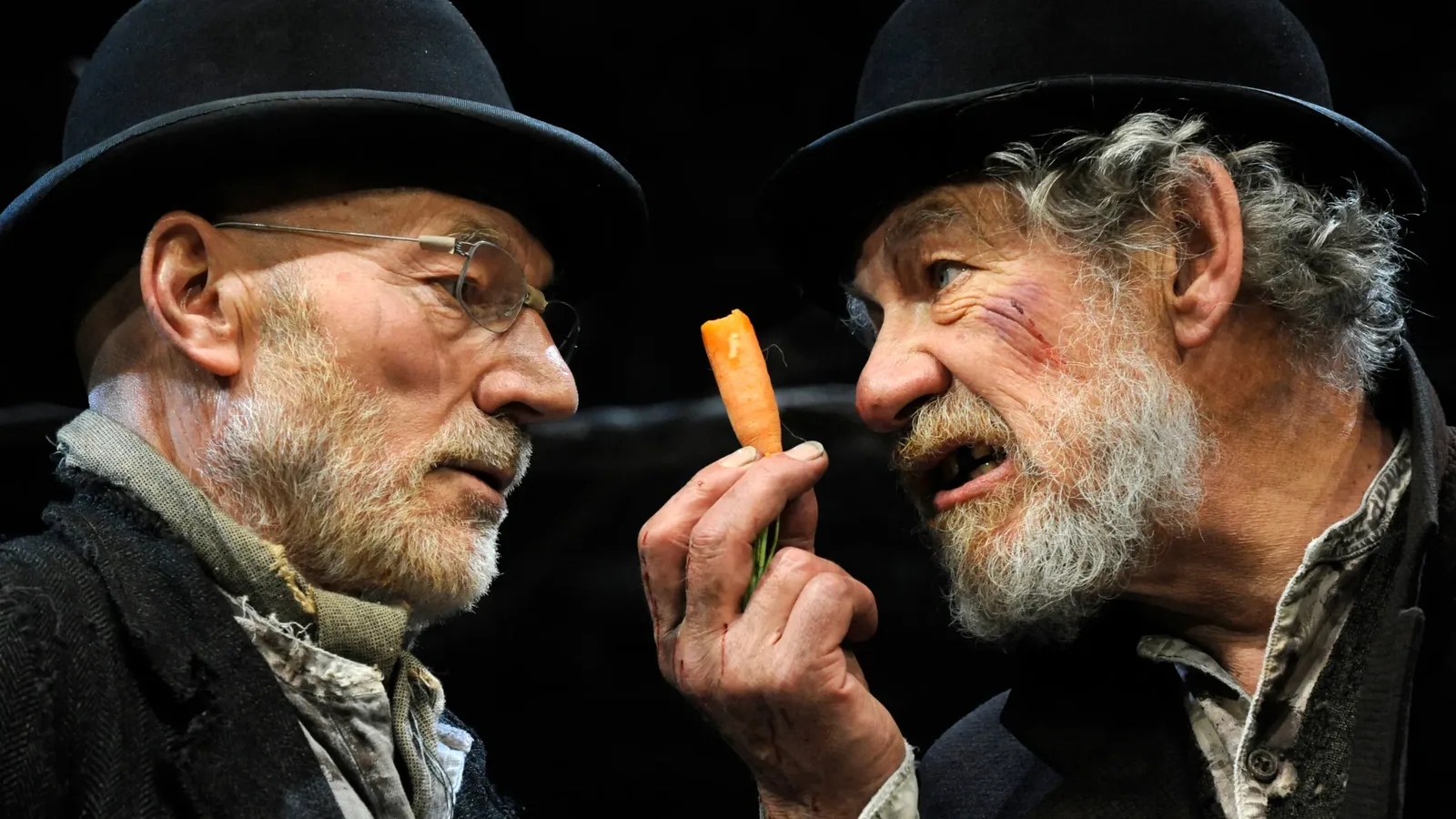
This is a man who played Claudius in Hamlet for the Royal Shakespeare Company, and stood beside Ian McKellen in Waiting for Godot. (McKellen, his friend from the X-Men set, officiated his wedding.) He was knighted at Buckingham Palace in 2010, for services to drama. Seven years later, he voiced a talking pile of poop in The Emoji Movie.
I loved him even more for it, because I realized how much more like me that beautiful Shakespearean bastard was than I ever knew.
Then there were the video games, one after another after another. The Elder Scrolls IV: Oblivion is a game I started over and over and over and over and over again, and every single time, I was greeted by Emperor Uriel Septim. Who was NEVER Uriel Septim to us.
He was Patrick Stewart. Every time.
They remastered that game last year and kept his voice. Of course they did.
You’re Safe Now
There’s one more side of him, and you should know it.
Patrick Stewart grew up watching his father beat his mother. Alfred Stewart served in the Second World War as a regimental sergeant major in the Parachute Regiment and came home carrying what we would now call PTSD. As a boy, Patrick screamed at him to stop.
He could have kept that buried. Instead he talked about it, in public, for years. He became a patron of Refuge, the UK charity for abused women, because of his mother. He put his name behind Combat Stress, the charity for veterans, because of his father, and he was clear that understanding what the war did to the man did not excuse what the man did. “Violence is a choice,” he said in 2009, “and it’s a choice a man makes.”
I know something about that.
I saw my mom get verbally abused almost every day, and I dealt with it too. She got yelled at what felt like every day of my life. So did I. One bad grade and I was terrified to go home.
When my father’s mother was dying, she wanted to die in her own bed. He wanted her to come live with us. I told him to leave her alone and let her die in her home, and we got into a fist fight in her kitchen. That was the first time we ever got into a fist fight, and it had been a long time coming.
So I understand, just as Sir Patrick did, the damage that can do to a person. I also know that every argument has two sides, and that the sins of the father can change the heart of the son.
But I realized, on my own time and in my own life, that it doesn’t mean you have to keep carrying what they put down on you.
At Comicpalooza in 2013, a fan asked him about that work and told him she had lived through it too. He told the room it “grew out of my own childhood experience.” He told them, “My mother did nothing to provoke that.” The room stood up for him. And then he crossed over to her and held her, and, as she wrote afterward, he told her this:
“You never have to go through that again, you’re safe now.”
I knew none of this on that futon in Kentucky. All I knew was that the voice felt safe. Xavier felt safe. Now you know where that came from. A boy who couldn’t make his own mother safe grew up to say those words to a stranger, and to mean them.
He Did It for Dogs, Too
In 2017, while he was working with the ASPCA against dogfighting, he and his wife, Sunny Ozell, fostered a shelter pit bull named Ginger and fell in love with her. They couldn’t keep her, because they lived part of the year in the UK, where pit bulls are banned. Ginger went to a good home, and he kept fostering, and he said out loud what anyone who has loved one of these dogs already knows: the problem is the owner, not the dog.
I’m not a dog person. But the last dog I had was a pit bull, and the hatred those dogs get is unwarranted.
Sir Patrick understood that.
Where No Man Had Gone Before
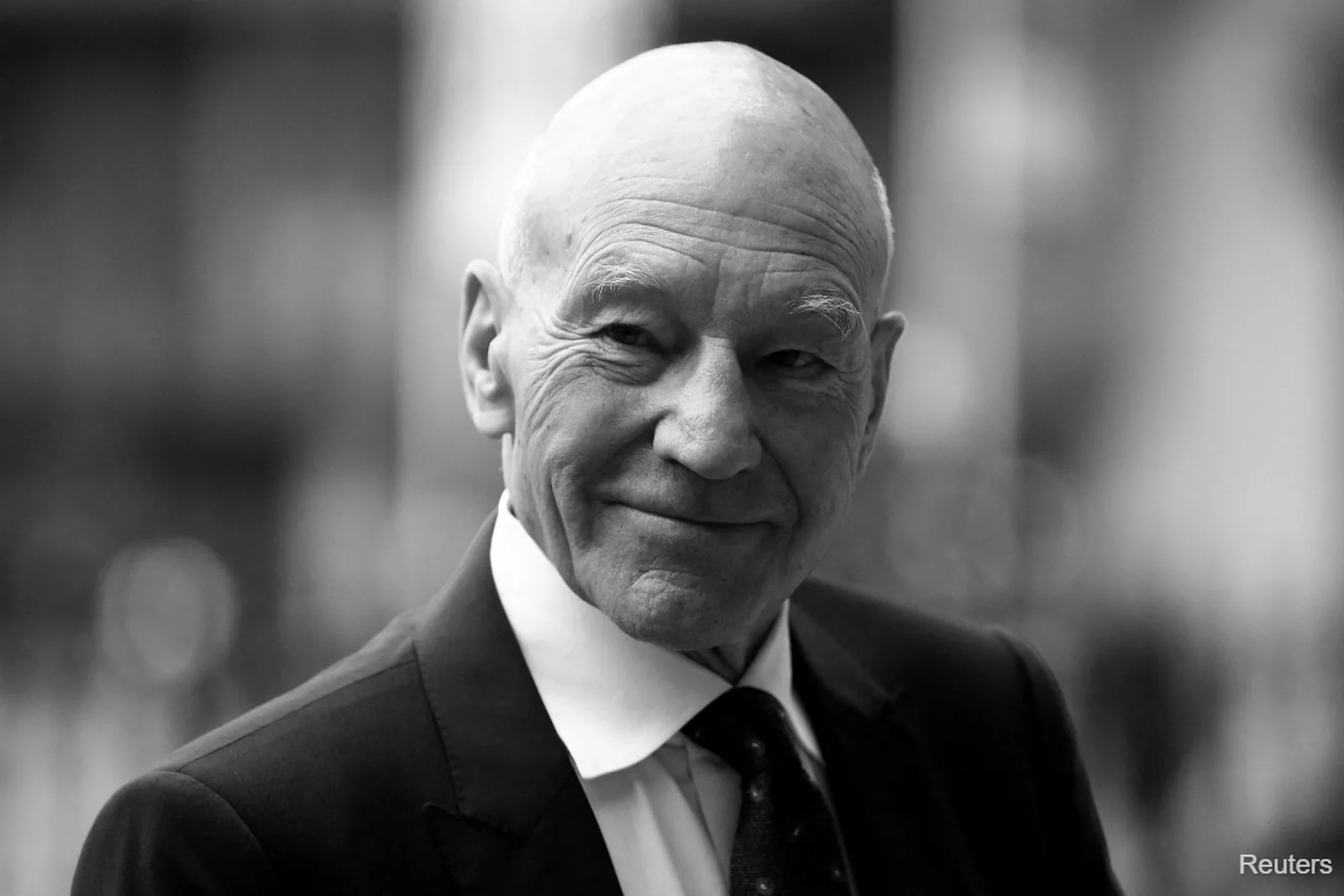
Now he’s gone, and I’m remembering how important legacy is. I will never forget him, not until the day I die, because he helped shape me more than he will ever know, and more than any single character could. He’s in the prose. He’s in the poetry. He’s in my sense of honor, and style, and humor, and voice.
In every role he filled, Sir Patrick Stewart proved himself the best of actors in the entire world. Unrivaled. Absolutely unrivaled. Absolutely.
And most of all, he was a voice in the dark, there to lift me up and to ease me into dreaming.
Rest in peace to the master of his field, the measuring stick every actor will be held to for the rest of my life.
Star Trek. X-Men. Hamlet. The Elder Scrolls. Family Guy. Ninja Turtles. Video game after video game after video game. And most importantly, my entire life.
My entire life, you were there.
Go boldly, Captain. Professor. Emperor. Knight.
And thank you so much for the inspiration.